
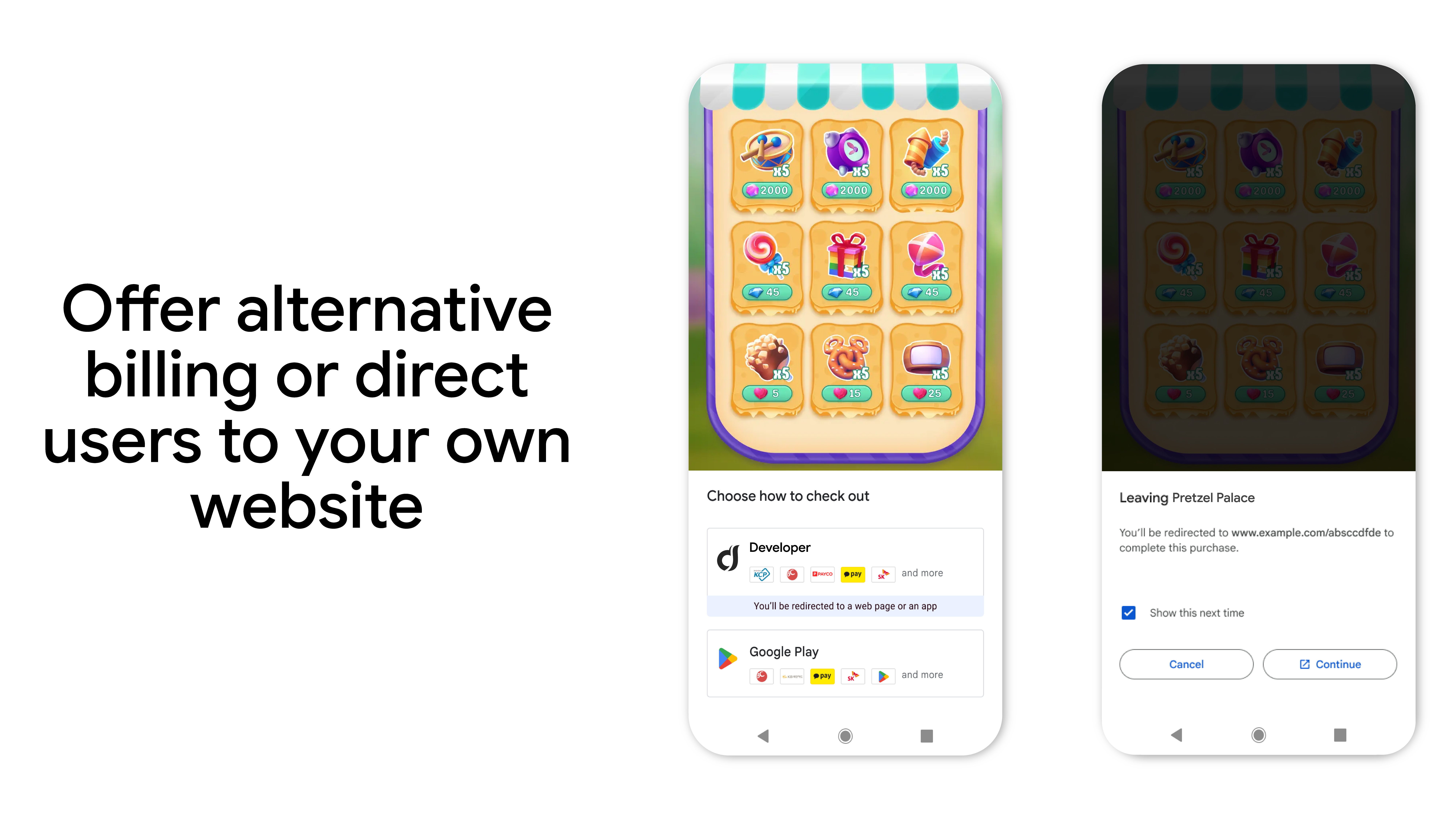
Google is changing the Play Store money flow, but it is not turning Android app distribution into a free-for-all.
The important shift is structural. Google says it is separating its Play service fee from its billing fee, expanding alternative billing choices, and creating lower-rate programs for apps and games that meet certain quality and ecosystem requirements. Developers get more flexibility. Google keeps a platform fee. Users may see more payment options inside apps.
That is a real change, just not the end of the Play Store tax.
What is changing first
Google says the new fee structure starts on June 30, 2026, beginning in the United States, the European Economic Area, and the United Kingdom. The company says developers that sell digital content or services in those regions can offer Google Play billing, an alternative billing system, or an external web link for purchases.
The fee math now has two pieces:
| Fee | When it applies | What Google says |
|---|---|---|
| Service fee | Applies regardless of billing route | Starts at 10% on the first $1 million in annual earnings and for auto-renewing subscriptions. |
| Billing fee | Applies when Google Play billing processes the transaction | Set at 5% in the U.S., U.K., and EEA. |
| Alternative billing or web link | Developer handles payment outside Google Play billing | The billing fee does not apply, but the Play service fee still does. |
That separation matters because it makes Google’s position explicit: the payment processor and the app-store platform are being priced as different services.
Why developers should care
For smaller developers, the headline is the lower first-million-dollar service fee. For larger developers, the bigger question is whether alternative billing is worth the operational burden.
Running your own payments means more control over checkout, customer relationship, and possibly margin. It also means handling taxes, refunds, compliance, subscriptions, support, failed payments, fraud, local methods, and user trust. Google is effectively saying: you can leave our billing rail, but you still pay for Play’s distribution, safety, and commerce surface.
That tradeoff is not simple.
The rollout is staggered
Mobilissimo notes the same staged rollout Google describes: the initial phase starts with the U.S., U.K., and EEA, with Australia, Japan, South Korea, and other markets following on later dates. Google says the staggered schedule is needed because the model depends on technical infrastructure and local regulatory alignment.
| Market | Planned billing-choice timing |
|---|---|
| U.S., U.K., EEA | June 30, 2026 |
| Australia | September 30, 2026 |
| Japan and South Korea | December 31, 2026 |
| Other markets | Later staged rollout, with broader availability planned into 2027 |
That timing tells you what this really is: part regulatory response, part developer-relations reset, part commercial redesign.
Apps and games get new incentive programs
Google is also pointing developers toward Games Level Up and Apps Experience. The idea is familiar: meet certain experience and ecosystem criteria, and qualify for more favorable rate cards.
The upside is obvious for high-quality apps that already invest heavily in Android. The caveat is that incentive programs can turn into another checklist layer. Developers will need to compare the fee savings against the product, support, and compliance work required to qualify.
Bottom line
Google’s Play Store changes are meaningful because developers finally get a clearer split between the platform fee and the billing fee. Third-party billing can now be a practical option in more places, especially for companies with mature payment infrastructure.
But the platform tax is not gone. Google is reducing and reshaping the bill, not walking away from it. For developers, the smart move is to model the full cost of payments, support, compliance, and conversion before treating alternative billing as an automatic win.