
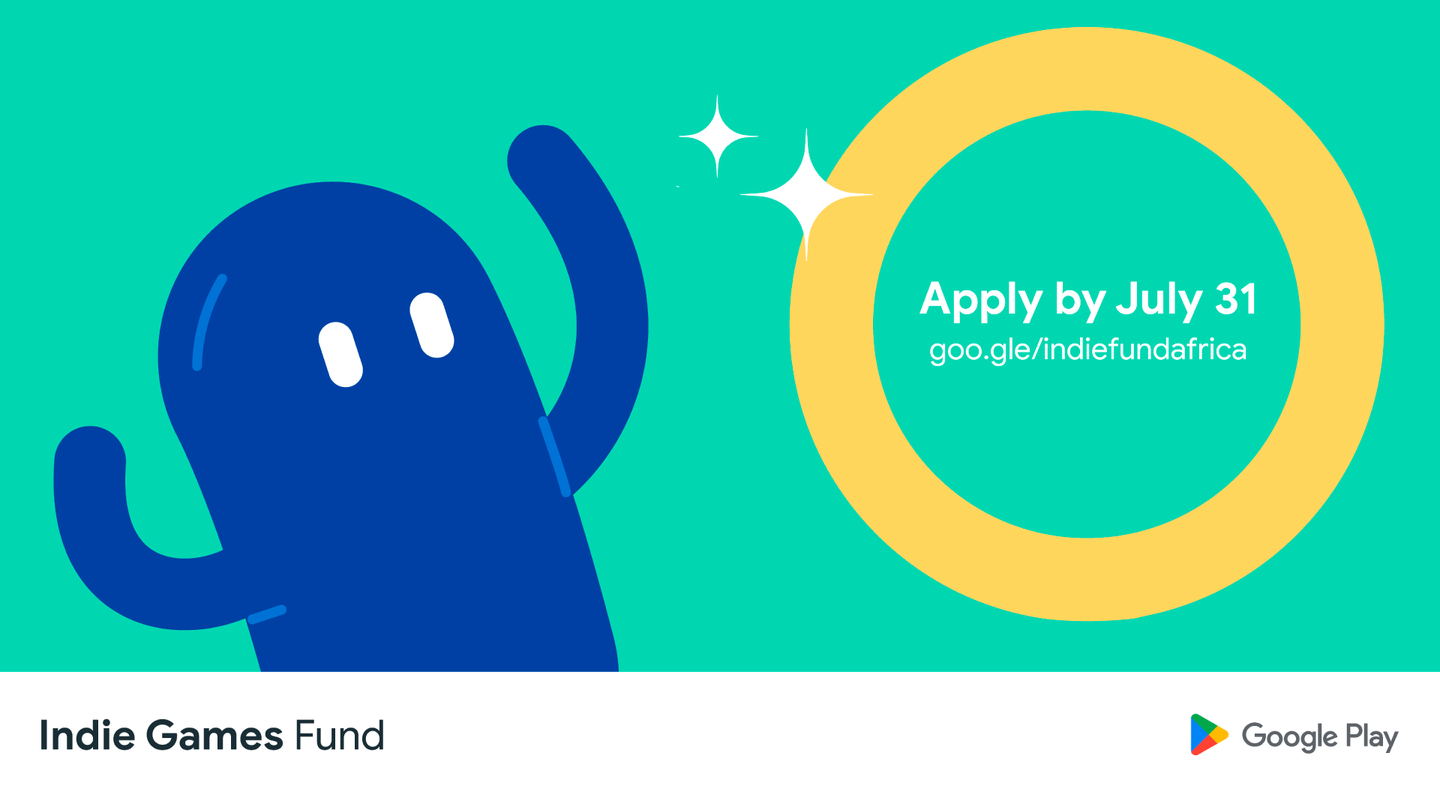
Google Play’s new Africa indie games fund is easy to misread as another friendly platform grant. It is more interesting than that.
Google says it is committing $1 million to support 10 indie game studios in Sub-Saharan Africa. The selected studios will receive between $50,000 and $200,000 each, plus mentorship and hands-on technical support. The official application page frames the program around studios in 32 African markets, with applications closing at noon UTC on July 31, 2026.
GearPulse’s view: this matters because African game studios do not only need applause for creativity. They need capital, tooling, distribution knowledge and enough runway to polish games for global stores without surrendering ownership too early.
The fund is small, but targeted
One million dollars is not a huge number in global gaming. A single premium console project can burn through that quickly. But for small mobile, PC or console studios, $50,000 to $200,000 can be the difference between a promising prototype and a game with proper launch preparation.
That is why the structure matters.
| Google Play Africa Indie Games Fund detail | Confirmed program direction |
|---|---|
| Total commitment | $1 million |
| Number of studios | 10 promising local studios |
| Funding range | $50,000 to $200,000 per selected studio |
| Equity | Google describes it as equity-free support |
| Support | Mentorship and hands-on technical support |
| Eligibility direction | Indie developers in Sub-Saharan Africa with a launched mobile, PC or console game |
| Application deadline | July 31, 2026 at noon UTC |
The useful thing here is focus. Google is not saying it will solve the African games market. It is putting a defined amount behind studios that have already shipped something and now need help scaling.
That shipped-game requirement is important. It filters for teams that have crossed the hardest psychological barrier in creative software: finishing a thing people can play.
Why this matters to players
Players should care because game markets become healthier when more cultures can participate as creators, not just consumers.
African game development has often been discussed through potential: young audiences, mobile-first behavior, strong storytelling traditions and fast-growing digital economies. Potential is useful, but it can become patronizing if the pipeline never turns into commercial games that travel.
The best case for this fund is not that Google gets nice headlines. The best case is that players see more games whose worlds, jokes, characters, rhythms and myths are not filtered through the usual U.S., Japanese, Korean or Western European production lens.
That does not mean every funded game must perform a cultural lecture. In fact, the stronger outcome would be the opposite: African studios making games that are specific enough to feel new and polished enough to compete without explanation.
Platform help can be valuable and limiting
Google Play is a logical backer because mobile distribution is central to many African gaming businesses. Android reach matters. Store visibility matters. Analytics, monetization design, testing support, device compatibility and global launch timing can all decide whether a good game finds an audience.
But platform-backed development always has a caveat. A platform’s idea of success may lean toward store performance, retention, monetization and scalability. A studio’s idea of success may include those things, but also authorship, community, experimentation and long-term independence.
That tension is not a reason to dismiss the fund. It is a reason to judge it by outcomes.
| Healthy signal | Warning signal |
|---|---|
| Studios retain creative control and ownership. | Funded teams become showcase material without durable business support. |
| Games ship with stronger polish, localization and store readiness. | Support optimizes too heavily for generic mobile monetization patterns. |
| The program highlights specific studios and measurable progress. | Coverage stays vague around “African potential” without naming products. |
| Follow-on funding becomes easier for alumni. | The fund becomes a one-off publicity cycle. |
Equity-free funding is a good start because it gives studios oxygen without taking a permanent slice of the company. The harder part is whether the mentorship helps teams build sustainable businesses, not just better store pages.
The market gap is real
Google’s announcement is blunt about the problem: talent exists, but there is a significant investment gap. Regional coverage from IT-Online places the fund inside a wider Google Africa investment push, including infrastructure, research and skills programs.
For game studios, the gap is not only money. It is also access to experienced producers, user-acquisition knowledge, platform relationships, QA pipelines, localization budgets, payment infrastructure and predictable publishing paths.
Those are not romantic parts of game making. They are the parts that let a studio survive the gap between “people liked our demo” and “we can keep a team employed.”
That is why this fund is relevant to more than Android. It reflects a broader question in tech: who gets to build for global markets, and who only gets described as an emerging user base?
What should applicants watch?
For eligible studios, the practical opportunity is clear. But the best applicants should treat this like a serious growth program, not free money.
| Applicant question | Why it matters |
|---|---|
| What milestone would the funding unlock? | A focused production or launch milestone is stronger than vague “growth.” |
| What platform problem needs expert help? | Store conversion, performance, monetization and retention need different support. |
| How will the studio protect its creative identity? | Global reach should not flatten the thing that makes the game distinct. |
| What happens after the fund ends? | A grant should extend runway, not create a cliff. |
| Which markets are realistic first? | Global ambition works better with disciplined launch sequencing. |
The studios most likely to benefit are not necessarily the flashiest. They are the ones that already understand their players and can use Google’s support to remove specific growth blockers.
Bottom line
Google Play’s Africa indie games fund is relevant because it treats African game studios as builders of exportable creative software, not just local curiosities. The $1 million figure is modest in global gaming terms, but the combination of equity-free capital, mentorship and platform support can matter if it reaches teams with real products and clear plans.
The caveat is that the program should be judged by what happens after selection. Do funded studios ship stronger games? Do they grow beyond a single launch? Do players see something they could not have found from the usual markets?
If the answer is yes, this will be more than a corporate fund. It will be a small but useful correction to a gaming industry that talks about global audiences more often than it funds global authorship.
Support independent GearPulse articles at buymeacoffee.com/gearpulse.site.