
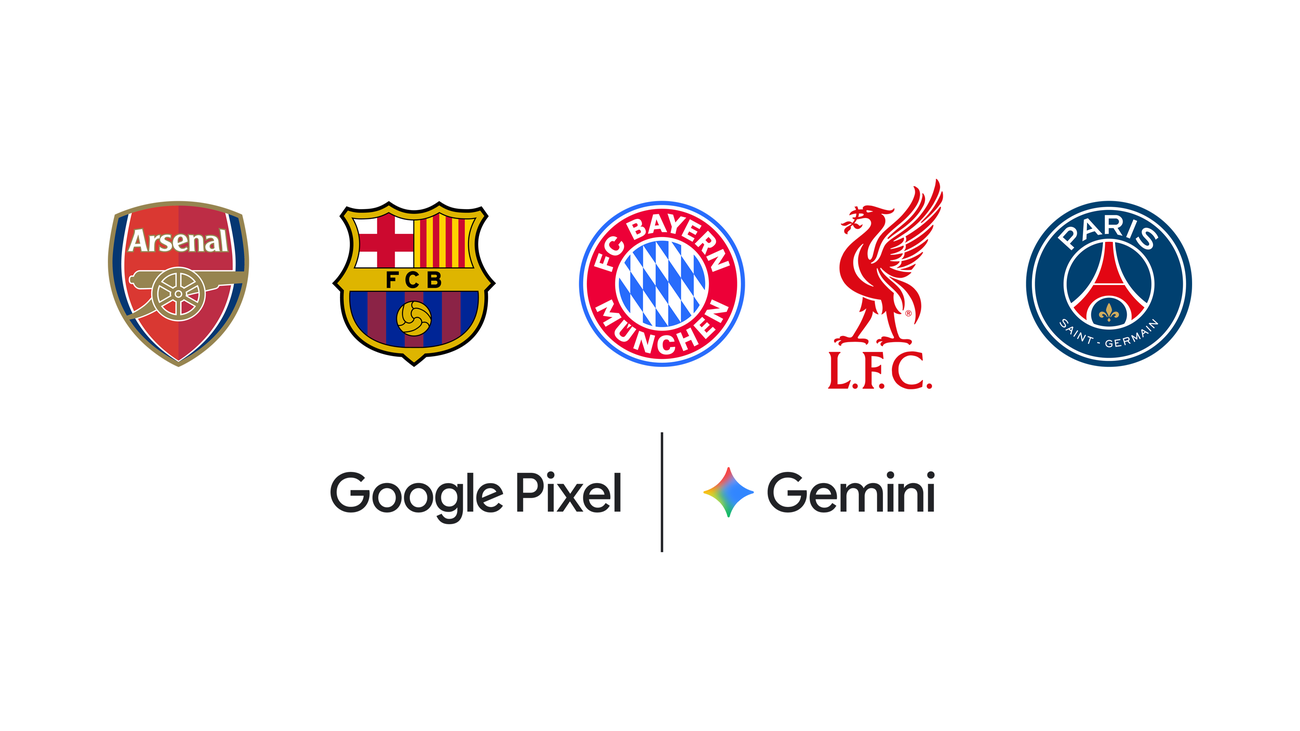
Football partnerships used to be easy to understand. A company paid for a sleeve logo, a stadium board, a hospitality box or a sponsored training clip. Google’s new Gemini and Pixel push with Arsenal, Barcelona, Bayern, Liverpool and PSG is more interesting because it is trying to live closer to the fan.
Google says Gemini and Pixel are becoming official consumer AI and smartphone partners across five elite European clubs. The promise is not just brand placement. It is match insight from Gemini, club media captured with Pixel, official wallpapers for Pixel 11 users and more visibility for women’s teams.
My read: this matters because football is one of the few consumer habits strong enough to make AI feel normal without a productivity pitch. Nobody wants another demo about inbox triage. A supporter arguing about a formation change, checking head-to-head history or grabbing a club wallpaper before kickoff is a much more natural door into AI.
The pitch is emotion plus utility
Google’s official announcement describes Gemini as a way for supporters to dig into match and club context, including tactical questions and historical comparisons. Pixel’s role is more visual: the phones will work with club media teams for behind-the-scenes content under Google’s Shot on Pixel framing.
The club announcements fill in useful detail. Bayern says the partnership starts with the 2026/27 season and covers its men’s and women’s teams. Barcelona describes Gemini as an analyst in fans’ pockets and points to Pixel-led content around its first teams. PSG says Gemini and Pixel will support fan experiences, internal creative work and a dedicated Google space at Parc des Princes.
| Club | Official Google role | Reader-facing hook |
|---|---|---|
| Arsenal | Consumer AI and smartphone partner via Google’s group announcement | Part of a five-club Pixel/Gemini football push |
| FC Barcelona | Consumer AI and mobile phone partner | Tactical explanations, club-branded device experiences |
| FC Bayern | Consumer AI and smartphone partner | Starts with the 2026/27 season; men’s and women’s teams covered |
| Liverpool | Consumer AI and smartphone partner via Google’s group announcement | Another huge global fanbase for the same AI/device playbook |
| PSG | Official AI Assistant and Official Smartphone | Multiyear technology partnership with club-content and stadium hooks |
The useful caveat is that these are partnership promises, not shipped product reviews. Google has named the broad experience, but supporters still need to see how often the content appears, which Pixel models get which assets, how useful Gemini’s football answers are during live matches and whether the clubs keep editorial control over their voice.
Why fans should pay attention
I like the ambition here more than the usual sports sponsorship because it touches the parts of fandom that already happen on phones. Supporters watch highlights, argue in group chats, share clips, change wallpapers, follow training photos and look up stats while the match is still happening. Google is not inventing a new behavior. It is trying to sit inside one that is already compulsive.
That is also why the deal deserves scrutiny. Football emotion is powerful, and AI products can turn vague enthusiasm into a fog of branded answers if they are not grounded in clear sources. A good Gemini football experience should cite fixtures, official stats and historical records cleanly. A bad one will sound confident while flattening the weird, tribal, contradictory part of being a supporter.
For Pixel, the challenge is different. “Shot on Pixel” content can be genuinely charming when it captures access fans would not otherwise see. It becomes weaker when every clip looks like a product demo with a badge on it. The best version gives supporters tunnel, training-ground and women’s-team visibility that feels worth following even if they do not care what phone filmed it.
The women’s football angle is not small
Google explicitly says the partnerships are meant to cover men’s and women’s teams and help close the visibility gap in women’s football. That point should not be treated as corporate garnish.
Women’s football has audience momentum, but it still fights for week-to-week distribution, highlights, social packaging and archive depth. If Pixel crews and club media teams consistently produce good material around women’s squads, this could be more meaningful than another men’s-first campaign with a token line at the end.
The test is regularity. A launch post is easy. Making the women’s teams a normal part of the content calendar is the harder, better thing.
What to watch next
| Question | Why it matters |
|---|---|
| Which Pixel devices get club assets? | Fans need eligibility details, not vague personalization language. |
| Does Gemini cite official match data? | Sports AI needs source discipline because confident trivia mistakes travel fast. |
| Do women’s teams get weekly coverage? | The visibility claim only matters if it survives the launch window. |
| Are clubs shaping the tone? | Football content dies when it sounds like generic platform marketing. |
| Can fans opt out of the AI layer? | Not every supporter wants algorithmic commentary wrapped around every match. |
This also connects with GearPulse’s recent Pixel and Google coverage. The broader pattern is clear: Google is trying to make AI less like a separate app and more like a layer inside phones, search, photos, finance, education and now fandom.
Bottom line
Google’s football partnerships are not interesting because they put a tech logo near famous clubs. They are interesting because they aim Gemini and Pixel at one of the most emotional, repetitive and phone-heavy habits in the world.
If Google and the clubs use that access to make matchdays richer, more visual and more inclusive, fans may actually care. If it becomes another AI slogan campaign, football supporters will notice faster than most audiences.
Support independent GearPulse articles at buymeacoffee.com/gearpulse.site.