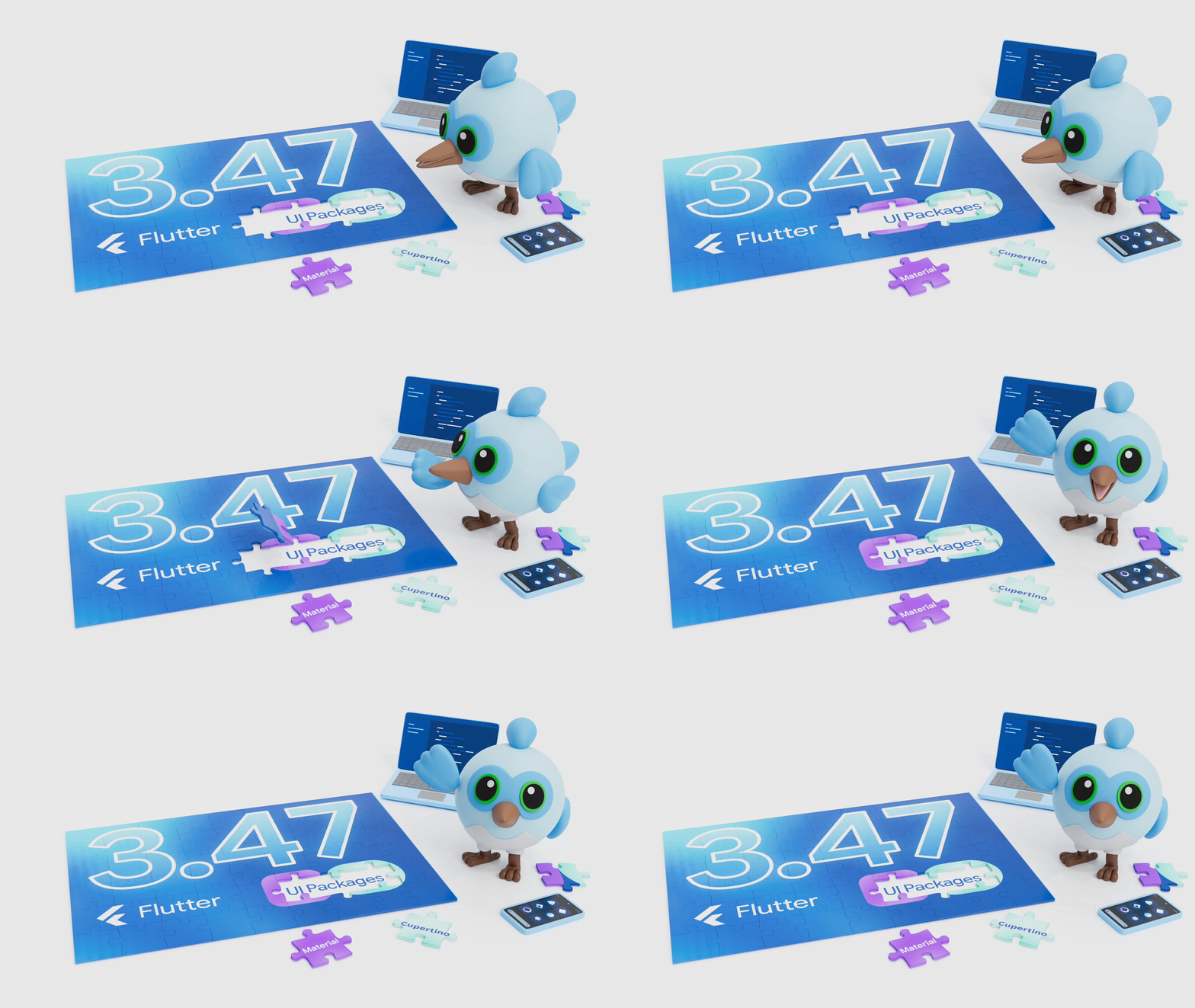
Flutter 3.47 is not the kind of release that wins attention with one magic widget. Good.
The official Flutter blog says 3.47 brings the 1.0 release of standalone material_ui and cupertino_ui packages, moves Impeller to desktop by default, prepares Flutter’s pipelines for iOS, macOS and Xcode 27, and graduates Widget Previews to stable. The release notes are long, as Flutter release notes tend to be, but the signal is clear: Google is making Flutter less monolithic and more serious about app teams that have to maintain products for years.
That is more interesting than a shiny demo. Most software pain is not born on launch day. It shows up six months later, when a design tweak needs a framework upgrade, a platform update breaks a build, a desktop app behaves slightly differently, or a team is scared to touch UI code because the golden tests are fragile.
Flutter 3.47 is relevant because it nudges those problems into the open.
The design-system split is the headline
Flutter has historically bundled Material and Cupertino directly into the core SDK. That was convenient, but it also meant design-system evolution was tied to Flutter’s SDK release rhythm. In 3.47, Flutter says the standalone material_ui and cupertino_ui packages have reached version 1.0 and are available as opt-in packages while the core SDK still includes the libraries for this release.
| Change | What it means | Why teams should care |
|---|---|---|
material_ui 1.0 | Material widgets can start living on an independent package track | Design-system updates can move separately from full SDK upgrades. |
cupertino_ui 1.0 | iOS-style widgets get the same standalone path | Apple-feeling UI can iterate without waiting for every framework change. |
| Core libraries remain | Existing apps are not forced into a same-day migration | Teams get time to plan instead of panic. |
| Opt-in model | Adoption is a deliberate dependency decision | Better for teams with visual-regression tests and strict release trains. |
My read: this is the grown-up version of cross-platform UI. The early promise of Flutter was “write once, run everywhere.” The more useful 2026 promise is “own your UI stack without every visual change being welded to your framework upgrade.”
That matters because real companies do not update apps for sport. They update when security, platform requirements, customer requests and store policies force their hand. If design systems can move more like normal dependencies, teams get more control over risk.
Impeller on desktop changes the performance conversation
Flutter also says Impeller is now enabled on desktop by default. That is the rendering-engine side of the story, and it should make desktop Flutter feel less like an afterthought.
Impeller has been part of Flutter’s multi-year rendering shift, and the Hacker News discussion around 3.47 reflects the obvious developer question: is Flutter becoming a stable cross-platform engine or just carrying a lot of rendering complexity? The fairest answer is both. Flutter’s strength is that it draws its own UI with consistent behavior. Its cost is that it owns a lot of the rendering stack.
Desktop-by-default Impeller is relevant because Flutter is no longer just a phone-app bet. Teams use it for tablets, embedded screens, desktop tools, web surfaces and companion apps. A cross-platform framework that wants to be taken seriously on desktop cannot treat rendering as a maybe-later issue.
Widget Previews are quietly practical
The stable Widget Previews piece may be the most immediately useful developer-experience change.
Design work slows down when every small UI check requires running the full app, clicking into the right state and hoping nothing external has changed. Stable previews make it easier to inspect components in isolation, tighten iteration loops and catch layout problems before they become QA tickets.
That connects with our recent Vercel scriptc piece. Different stack, same direction: developer tools are trying to remove setup drag from small, repeated checks. The winner is not always the tool with the wildest demo. It is often the tool that saves ten minutes a day and makes teams less afraid to change code.
| 3.47 feature | Who benefits first |
|---|---|
| Standalone Material/Cupertino packages | Teams with custom design systems or strict visual QA. |
| Impeller on desktop by default | Desktop Flutter apps and teams watching rendering consistency. |
| Stable Widget Previews | UI engineers, designers, QA and anyone maintaining component libraries. |
| Xcode 27 pipeline prep | iOS/macOS teams planning ahead of Apple’s next toolchain shift. |
| Multi-window and desktop work in release notes | Productivity apps and internal tools moving beyond mobile layouts. |
Do not upgrade blindly
This is where the practical advice gets less romantic. Flutter’s official post says users can run flutter upgrade, and many small projects probably can. Production apps should be more deliberate.
The design-package split is opt-in, which is good, but it also means teams need to decide when they want the new dependency boundary. Widget Previews being stable does not remove the need for screenshot tests, accessibility checks or device testing. Desktop Impeller by default is promising, but rendering changes deserve visual review, especially in apps with custom painting, charts, shaders or unusual text behavior.
I would treat 3.47 as a planning release first and an upgrade release second.
| Before upgrading | Why |
|---|---|
| Read the official release notes for your target platforms | The important issue may be platform-specific, not in the headline blog post. |
| Run visual regression or golden tests | Rendering and design-library boundaries can surface subtle UI differences. |
| Test desktop windows and input behavior | Desktop is a first-class target only if windowing and focus feel right. |
| Decide whether to opt into standalone UI packages now | Dependency control is powerful, but only if your team owns the upgrade plan. |
| Check CI and Xcode assumptions | Toolchain preparation matters before Apple’s next required jump lands. |
For a solo project, this may be a fun afternoon upgrade. For a production app, it deserves a migration branch, screenshots and a little boredom. Boring is good when customers are tapping the thing every day.
Why this matters to non-Flutter people
Even if you do not write Dart, Flutter 3.47 is part of a broader software trend: frameworks are learning that mature teams want smaller blast radiuses.
React, SwiftUI, Compose, Flutter and web meta-frameworks are all wrestling with the same problem. Developers want faster UI iteration, better previews, strong platform reach and fewer terrifying upgrades. The ideal framework is not the one that makes the launch video prettiest. It is the one that lets a team ship for five years without hating its own foundation.
That is why I like the shape of this release. It admits that UI frameworks are infrastructure. They carry taste, rendering, package boundaries, platform policy and team process. Making those boundaries clearer is not glamorous, but it is exactly what long-lived apps need.
Bottom line
Flutter 3.47 is a maintenance-minded release in the best sense. Standalone Material and Cupertino packages give teams more control over design-system timing, Impeller on desktop strengthens Flutter’s broader platform pitch, and stable Widget Previews make daily UI work less clumsy.
If you maintain a serious Flutter app, this is not a skip. It is also not a blind Friday upgrade. Read the release notes, test the visuals, decide when to opt into the new UI packages, and treat the release as a chance to make your app easier to own.