
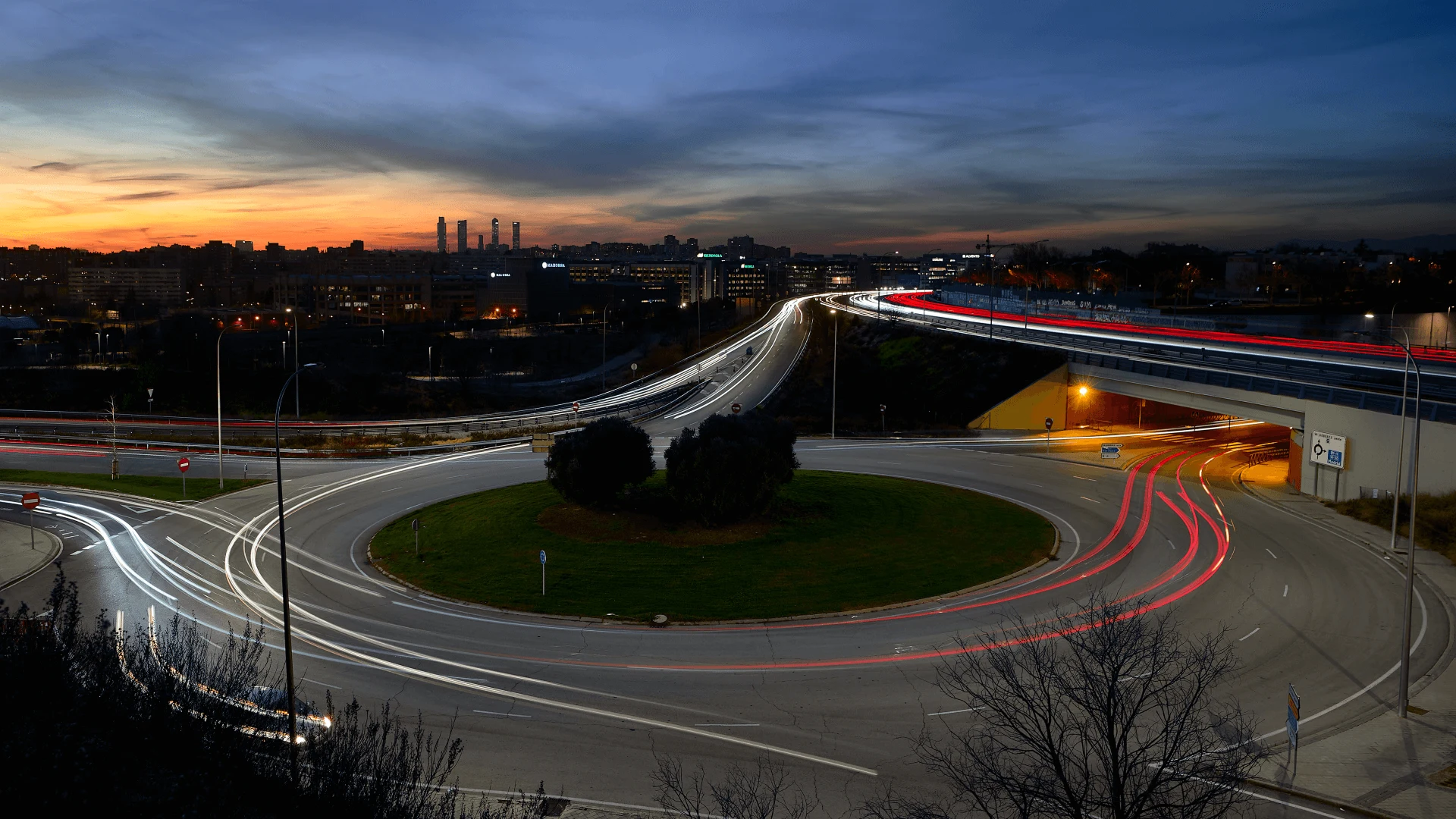
Madring has stopped being only a render, a ticket page and a calendar line.
Formula 1 confirmed on July 9 that Ferrari completed the first Formula 1 car laps around Madrid’s new venue during a filming day, with Charles Leclerc first on track and Lewis Hamilton also set to run. That is not a full test in the old-school sense. F1 also noted the normal filming-day limits: restricted mileage and promotional Pirelli tyres. But it is still the first real F1 reference point for a circuit that will host the Spanish Grand Prix on September 11-13.
That is why today’s Daily Dose of F1 is not another Silverstone hangover piece. Ferrari has turned Madring from a future-event story into a live sporting variable. The team that just won at Silverstone has now been first to put an SF-26 onto F1’s newest race venue, two months before the championship arrives.
GearPulse’s view: the competitive gain is probably modest, but the symbolic and operational value is not. New circuits punish uncertainty. Ferrari just bought itself the first small reduction in uncertainty.
What Ferrari actually learned
The caveat comes first: Ferrari did not get a private grand prix rehearsal.
Filming days are controlled events, not free development sessions. The tyres are not normal race-weekend rubber, the mileage is limited, and the programme exists partly for promotional content. Nobody should pretend Ferrari now has race simulation data, representative degradation curves or a secret setup book for September.
But F1 teams do not need perfect data for an early run to matter. The first laps can still teach useful basics:
| What Ferrari could learn | Why it matters in September |
|---|---|
| Sightlines and reference points | New street-style venues can feel different from simulator models once barriers, buildings and kerbs are real. |
| Surface transitions | Madring mixes public roads with permanent sections, so grip and bump profiles are part of the story. |
| Kerb and escape-road feel | Early driver comments can help the team check whether simulator assumptions match reality. |
| Operational flow | Garage access, out-lap rhythm, communications and marshal procedures all become more concrete. |
| Energy-management hints | The 2026 cars reward detailed understanding of acceleration zones, braking zones and recharge opportunities. |
That last point is the one to watch. Formula 1’s official race page says Madring is a 5.416 km layout with 57 laps and a 308.524 km race distance. It also describes a semi-street character: public roads, private land, 22 corners, long straights projected to reach 340 kph, elevation changes and the longest banked turn on the calendar.
In 2026 F1, that is not just scenery. It is energy deployment, lift-and-coast planning, active-aero timing and tyre-temperature control.
Why the timing is perfect for Ferrari
Ferrari arrives in this story with momentum.
Leclerc won the British Grand Prix at Silverstone, Hamilton joined him on the podium, and the team suddenly looks like the most credible pressure point for Mercedes. That matters because a filming day at Madring is more useful when the car is already in a serious window. If Ferrari were lost, the run would be theatre. With the SF-26 now competitive, even limited circuit familiarity becomes more interesting.
The strategic value is not that Ferrari can solve Spa or Hungary from Madrid. It cannot. The value is that Leclerc and Hamilton can begin building a mental model of a venue every other team will mostly know through simulation, mapping and public road-car references.
That advantage should be kept in proportion. Williams’ Carlos Sainz had already sampled Madring in a Ford Mustang during a media run, and F1’s own gallery from May made clear the circuit was already becoming tangible before Ferrari arrived. Every team will also have extensive simulator preparation by September.
Still, there is a difference between “we have driven it virtually” and “our race drivers have felt the real approach, walls, banking and surface.”
GearPulse’s probability read, as editorial analysis rather than betting advice: Ferrari’s early laps are unlikely to be worth more than a tenth or two directly in September. Put the chance of a measurable Ferrari race-weekend edge from this day alone at roughly 15-25%. Put the chance that it improves correlation, driver confidence or operational preparation in a smaller but real way closer to 40-50%.
Madring is not a normal new track
The official venue pitch is ambitious. Madring’s own site says the Grand Prix runs from September 11-13 and describes the layout as 5.4 kilometres, 22 corners and 57 laps, with technical sections and La Monumental as its signature feature. Formula 1 adds the important detail: Turn 12 is a half-kilometre, 24% banked corner that could hold around 45,000 spectators around that section.
That is the fun fact with teeth. La Monumental is being sold like an instant landmark, but it also creates a technical stress point. F1’s feature on the corner says Carlos Sainz expected cars to enter between 180 and 200 kph and keep accelerating through the 550-metre curve. It also notes that the crest on exit will briefly make the view ahead more difficult.
For drivers, that means confidence. For engineers, it means load, ride height, deployment and tyre temperature. For race control and the promoter, it means sightlines, recovery plans and crowd operation around a huge focal point.
Madrid is not simply replacing one conventional permanent circuit with another. It is bringing F1 back to Spain’s capital after decades away from Jarama, but with a hybrid venue that wants the city-centre accessibility of a street race and the spectacle of a purpose-built arena.
That is exciting. It is also a risk.
The local signal matters
The reason this story rose above a routine team filming day is the breadth of pickup.
Formula 1 carried the official confirmation. AS, Cadena SER and El Pais all treated it as a major local milestone, with the Spanish reports focusing on Ferrari being first to run an F1 car there, the September debut timeline, and the practical disruption around road closures and construction work. That is exactly the kind of local-mainstream attention a new Grand Prix needs before it becomes a race-weekend product.
New venues do not just have to satisfy racing fans. They have to convince residents, cities, transport networks, sponsors and broadcasters that the inconvenience is worth the spectacle. A red Ferrari running through the new Madrid layout is a cleaner proof point than another render.
It also gives F1 a different story between Silverstone and Spa. The championship has spent the past week arguing about Safety Car messaging, Ferrari’s title revival, Red Bull’s technical problems and customer power-unit politics. Madring shifts the attention toward growth: a new city, a new circuit identity and a late-season race that could become strategically important if the title fight is still tight in September.
What rivals should care about
Mercedes should care because Ferrari’s confidence is growing. If Leclerc and Hamilton arrive in Madrid with the car still competitive, every extra bit of familiarity helps a team trying to pressure a championship leader rather than merely win isolated races.
McLaren should care because Madring’s 2026 profile sounds like exactly the kind of venue where power-unit exploitation, energy recovery and straight-line efficiency may matter. After Silverstone exposed McLaren’s uncertainty around the Mercedes package, a new energy-sensitive circuit is not a neutral challenge.
Red Bull should care because a semi-street venue with walls, banking and fast load changes can expose narrow car windows. Max Verstappen can often paper over a car’s weaknesses, but new circuits reduce the comfort of accumulated setup history.
Williams should care for a different reason. Sainz is Madrid’s home figure and already gave the venue an early public driving reference. If Williams can stabilize its upgrade path by September, Madring could become one of its most visible weekends of the season.
Bottom line
Ferrari’s Madring run is not a secret test, and it should not be inflated into a guaranteed September advantage. The tyres, mileage and filming-day format put a hard ceiling on what the team can learn.
But it is still the most interesting F1 story of the day because new circuits are uncertainty machines. Ferrari just got to touch one first, with the same driver pairing that has suddenly made the 2026 title fight more uncomfortable for Mercedes.
For F1, the bigger win is that Madring now feels less theoretical. The official race page can list 5.416 km, 57 laps and La Monumental’s banking all day long, but an F1 car on the circuit changes the emotional temperature. It tells teams, fans and the city that September is not an abstract launch window.
Madring is coming. Ferrari got the first feel for it. The rest of the grid now has two months to decide whether that was just a photo opportunity or the first small piece of a new race-weekend puzzle.