Stefano Domenicali has put Formula 1’s 2026 problem into one blunt question: do fans need to see why an overtake happened, or is it enough that the overtake happened?
The F1 president and CEO used a July 29 media call to defend the new rules after weeks of criticism from drivers and viewers. The Guardian, Autosport, RaceFans, Road & Track, The Independent, PlanetF1 and AS all picked up the same tension: battery state-of-charge information has become less visible on F1 broadcasts just as the cars have become more dependent on electrical energy management.
GearPulse’s view: Domenicali is right about one thing and wrong about the bigger one. Formula 1 should not turn every race into an engineering dashboard. But in 2026, electrical deployment is not background texture. It is part of the pass, part of the defence, and part of why some drivers think the racing feels artificial. If F1 hides too much of that context, it risks making exciting racing look less honest than it really is.
Why this rose today
This was the strongest Daily Dose story because it moved the 2026 regulations debate from the cockpit to the broadcast booth.
GearPulse already covered Spa’s energy-algorithm backlash on July 20, when drivers were openly frustrated by how much the new cars asked them to harvest, deploy and trust software maps. A second article simply saying drivers still dislike the rules would be repetitive.
Domenicali’s comments are different. He is not just defending the technical package. He is making a product argument about what F1 thinks most viewers want from the show. The trend signal is strong because the same media call produced quick follow-up across mainstream, specialist and fan-facing outlets. Autosport/Motorsport.com framed it around disappearing battery graphics. RaceFans focused on whether viewers can understand clipping and energy-offset overtakes. Road & Track and The Independent turned the comments into a wider fanbase split.
There is also a clean official baseline. Formula 1’s own 2026 regulation explainers say the current cars use a roughly even split between combustion and electrical power, that boost can be used to attack or defend, and that overtake mode replaces DRS as the main chase aid. The FIA launch material for the regulations promised lighter cars, active aero and increased battery power to improve the spectacle.
That is why the broadcast question matters. F1 made the electrical system a sporting instrument. Fans do not need every parameter, but they do need enough context to understand the instrument.
Domenicali has a point
The easy reaction is to say F1 should show everything because more data is always better. That is not true.
Most viewers do not need brake traces, throttle traces, gearbox maps, harvest limits, lift-and-coast deltas and state-of-charge overlays stacked across the screen every lap. A race broadcast has one primary job: show the race. If data gets in the way of seeing a wheel-to-wheel move, the graphic has failed.
Domenicali is also correct that a growing audience watches F1 differently. The Guardian reported F1’s view that women now make up 42% of the audience, that women account for three-quarters of new fans, and that 43% of the total fanbase is under 35. Those viewers are not a lesser audience because they did not grow up reading fuel-corrected lap charts. The sport should be intelligible without asking new fans to pass a technical exam.
The fun fact is that F1 has had this argument before. DRS was once treated as the artificial button that would cheapen overtaking. A decade later, many fans barely noticed the activation logic unless a detection line, train or late-race tyre offset made it controversial. Domenicali is betting that battery-assisted 2026 racing will follow the same path.
Maybe it will. But 2026 is not just DRS with a different icon.
Why battery context is different from DRS
DRS was visible. The rear wing flap opened. The following car usually had to be within one second at a detection point. The broadcast could explain the pass with a simple line: the chasing driver had DRS, the defending driver did not.
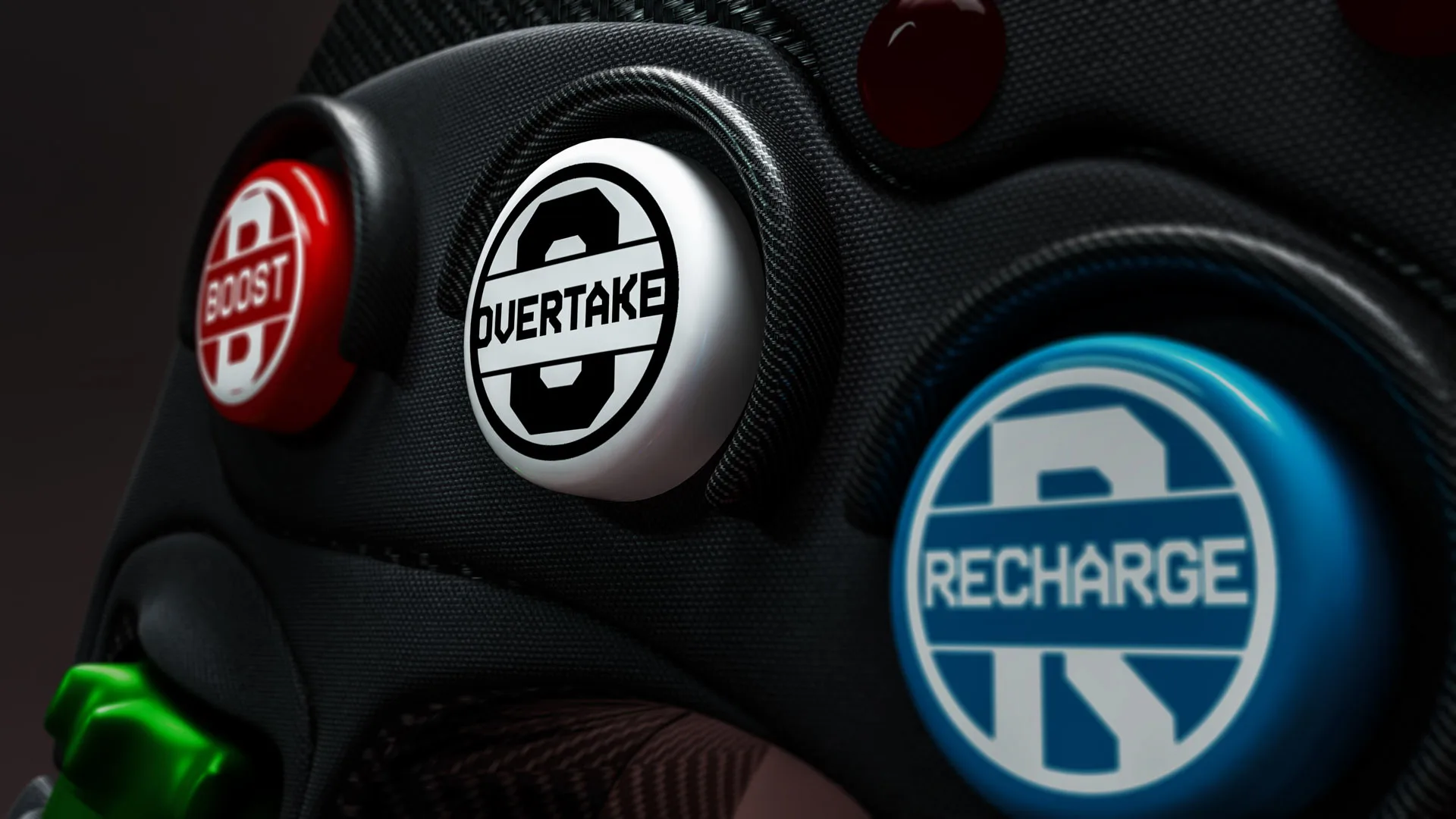
The 2026 system is more opaque. Formula 1’s explainer lays out multiple moving parts: recharge, boost, overtake mode and active aero. Energy can be saved by lifting, harvested in automated ways and deployed differently across the lap. A driver may look brilliant, helpless, patient or wasteful depending on battery state that the viewer cannot see.
That is the trust issue. If Max Verstappen passes Lewis Hamilton into Turn 1 in Hungary, F1 wants the viewer to see driver quality. Fair enough. But if one car had a significant deployment advantage because of earlier harvesting, the viewer should not be left guessing whether the move was mostly judgement, setup, battery offset, tyre condition or all of the above.
The same applies in defence. A driver who looks passive on a straight may be managing energy for the next lap. A driver who suddenly attacks in an unusual place may have prepared that moment for half a lap. Without some broadcast language for those differences, the audience is asked to believe the spectacle without being given the tools to read it.
The better answer is layered data
F1 does not need to choose between pure vibes and a telemetry wall.
A good broadcast can keep the main picture clean while adding a few simple signals:
| Broadcast cue | Why it helps |
|---|---|
| Relative battery advantage | Shows whether the attacker has an energy edge without exposing team-sensitive detail. |
| Recent harvest warning | Explains why a driver lifted early or lost straight-line speed before a later attack. |
| Boost/overtake availability | Gives viewers the 2026 equivalent of a DRS context clue. |
| Post-move replay annotation | Lets F1 explain a decisive pass after the fact without cluttering the live shot. |
That would serve both audiences. New fans still see the move first. Long-time fans get enough evidence to understand why the move was possible. Teams keep their exact maps and competitive secrets.
The likelihood is that F1 eventually lands somewhere in this middle ground. The sport has already adjusted the 2026 rules once, and Domenicali’s own comments, as reported by PlanetF1 and The Independent, leave room for criticism as long as it is constructive. The open question is whether F1 sees battery context as clutter or as part of the story it now has to tell.
GearPulse’s bottom line
Domenicali is defending the right goal: F1 should be watchable, emotional and easy to enter. But the 2026 cars changed the definition of race craft. Energy deployment is now part of overtaking, not a backstage detail.
So the answer is not to flood the screen with engineering data. It is to stop treating battery context as something only a niche fan would want. If F1 wants viewers to trust the racing, it should show just enough of the hidden fight to make the visible one mean more.