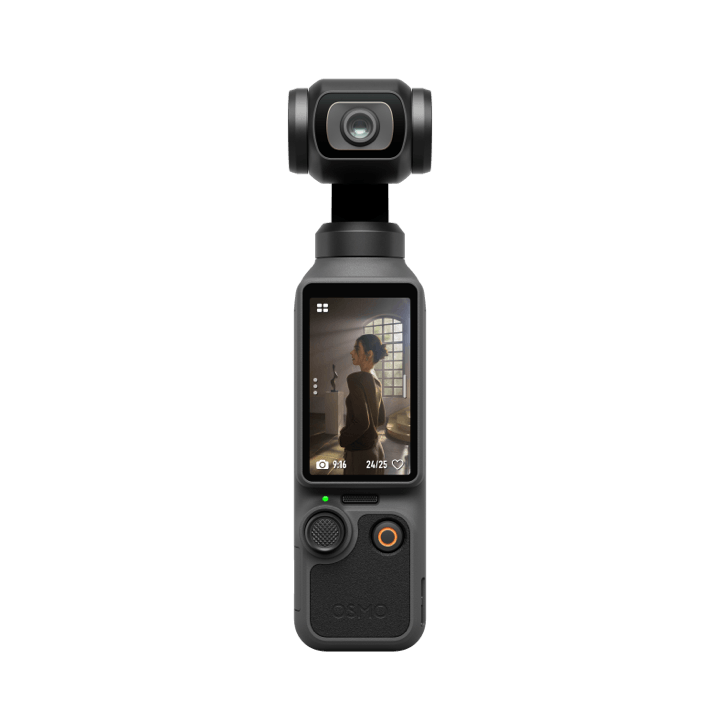
If you have been calling DJI’s next pocket gimbal the “Osmo Pocket 4 Pro,” you were not really wrong. You were just using the internet’s informal naming before DJI finished making the official version clear.
The company is publicly using Osmo Pocket 4P branding in its Cannes announcement, while its broader product platform messaging is still anchored around Osmo Pocket 4. Either way, the hardware direction is easy to read: DJI wants this thing to sit closer to real creator gear than casual vlogging toy.
The official pitch
DJI’s Cannes announcement framed the Osmo Pocket 4P as a handheld cinematic tool, not only a lifestyle camera. The public product page for Osmo Pocket 4 backs that up with a spec sheet that is unusually ambitious for something that small.
| Official spec highlight | Why it matters |
|---|---|
| 1-inch CMOS sensor | This is the part that gives the Pocket line a chance to look serious in difficult light. |
| 4K/240fps | Slow-motion flexibility without moving up to larger camera rigs. |
| 14-stop dynamic range | Better headroom for bright skies, windows, and contrast-heavy scenes. |
| 10-bit D-Log | A clear signal that DJI expects grading workflows, not just auto looks. |
| 2x lossless zoom | More framing freedom without leaning immediately on digital crop. |
| 3-axis stabilization | Still the reason the Pocket series exists at all. |
DJI also says the camera has 107GB of built-in storage and transfer speeds up to 800MB/s, which pushes it further toward “actual daily production tool” territory.
Why the naming confusion happened
This product sits in an awkward but familiar part of consumer tech branding. The public shorthand says “Pro” when a company wants to say something slightly more managed or market-specific.
That is why the useful reader takeaway is not to obsess over whether 4P equals Pro in a strict branding sense. The useful takeaway is that DJI is clearly positioning this generation as the one for creators who care about grading, low light, portrait work, and a smoother route into professional-looking footage.
The real attraction is still simplicity
The risk with small creator cameras is that brands keep adding professional language until the product becomes conceptually heavier than it is physically light.
DJI mostly avoids that trap here.
The Osmo Pocket formula still makes sense because it solves a plain problem: sometimes you want stabilized footage that looks much better than a phone, but you do not want to carry a mirrorless body, lens, gimbal, mic rig, and battery pouch just to walk out the door.
If the Pocket 4P delivers on the image quality claims without making operation fiddly, it will land exactly where it should: between smartphone convenience and dedicated-camera credibility.
The one thing still missing
DJI’s Cannes announcement said pricing and configurations would be announced later. That means the product story is ahead of the value story for now.
And value matters here. Pocket cameras win when they feel attainable enough to become a frequent-carry device. If the final pricing moves too close to larger hybrid-camera territory, the argument gets harder.
Bottom line
The “DJI Osmo Pocket 4 Pro” story has effectively arrived under DJI’s own Osmo Pocket 4P naming.
The official details make it clear what DJI is chasing: more cinematic control, more creator credibility, and a pocket camera that is less apologetic about being used for serious work.