
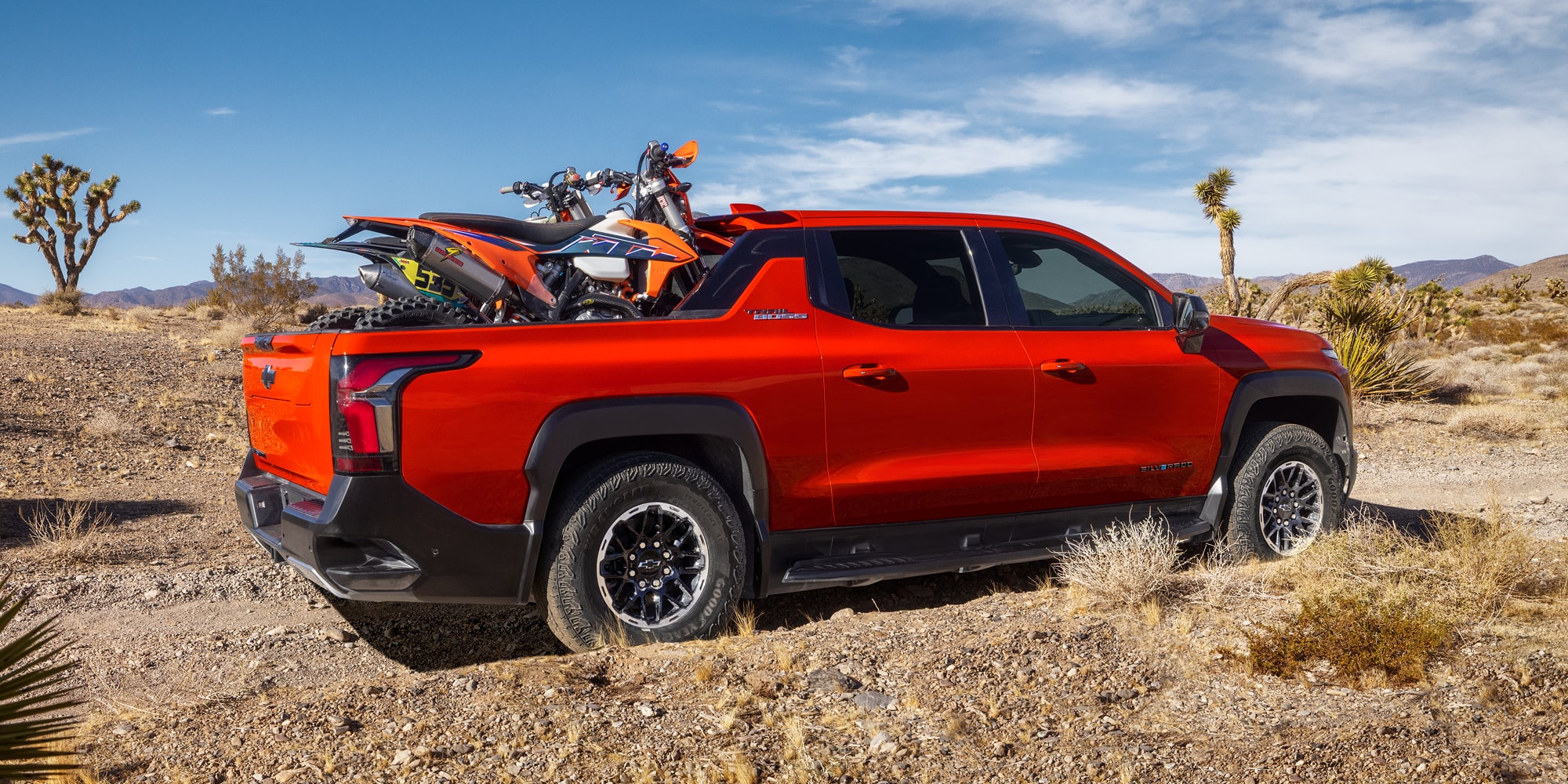
The Chevrolet Silverado EV should be an easy sell on paper. It is big, American, practical, powerful and packed with clever truck features. It can also travel far enough on a charge that the usual lazy EV jokes do not really land.
And yet the Silverado EV story is not a victory lap. TechCrunch’s current drive piece asks the blunt question: why is nobody buying it? GM’s own Q2 sales statement says the company remained America’s top automaker, but total sales fell as the EV market shrank. GM Authority’s model-level sales table puts the Silverado EV at 2,266 U.S. sales in Q2 2026, down 25.85 percent year over year, with 3,672 sales year to date.
GearPulse’s view: the Silverado EV is relevant because it shows the difference between building a capable electric truck and convincing truck buyers to change behavior.
The product case is not weak
Chevrolet’s official 2026 Silverado EV page lists the kind of numbers that should make an electric pickup feel credible.
| 2026 Silverado EV official claim | Why it matters |
|---|---|
| Starting price listed from $55,895 on Chevrolet’s retail page | Puts it below six-figure novelty territory, though desirable trims can climb much higher. |
| Up to 478 miles of GM-estimated range | Directly addresses range anxiety for daily use and longer trips. |
| Up to 775 lb-ft of available torque with Wide Open Watts | Gives the truck the effortless shove buyers expect from an EV. |
| Up to 12,500 lb of available towing | Keeps it in the serious truck conversation, with real-world caveats. |
| Available offboard power up to 10.2 kW | Turns the battery into a worksite, campsite or outage tool. |
| Available Four-Wheel Steer and Sidewinder | Helps a very large truck maneuver in tighter spaces. |
| Multi-Flex Midgate | Lets the bed extend into the cabin for longer cargo. |
Those are not filler features. TechCrunch came away impressed by the driving behavior, cabin space, frunk, range and truck utility. CarBuzz separately highlighted the Midgate as one of the Silverado EV’s most meaningful advantages because it gives the truck an old Avalanche-style flexibility most pickups cannot match.
So the issue is not that Chevrolet forgot how to make a truck.
Why the sales story is awkward
The awkward part is that the fossil-fuel Silverado remains a sales machine while the EV version is still niche.
That contrast hurts because the Silverado EV is not a compliance hatchback with a truck badge. It is a serious, expensive, highly engineered pickup built for exactly the brand audience Chevrolet should understand.
But pickup loyalty is not normal car loyalty. Many truck buyers know their routine with almost ritual precision: where they fuel, what they tow, how far they drive, how their truck behaves loaded, which dealer they trust, how resale works and what happens when something breaks far from home. A spec sheet does not erase that accumulated confidence.
EV trucks ask buyers to rewrite that routine.
| Buyer concern | Why the Silverado EV has to work harder |
|---|---|
| Towing range | Official tow ratings do not answer how far a heavy trailer can realistically go between stops. |
| Charging with a trailer | Pull-through fast chargers are still not common enough. |
| Price | EV truck capability can push shoppers into expensive trims. |
| Size | Nearly 20 feet of truck is useful, but it narrows the audience. |
| Familiarity | Gas and diesel Silverado buyers already know the ownership pattern. |
| Resale and battery aging | Long-term EV truck economics still feel less proven to traditional buyers. |
This is where the Silverado EV’s strong points can become confusing. A huge battery helps range, but adds cost and weight. Clever steering helps maneuverability, but the truck is still physically large. Offboard power is genuinely useful, but not every buyer values it enough to offset charging anxiety.
The American-made angle is not enough
The TechCrunch framing leans into the irony that Chevrolet built a very American EV truck and still has to fight for attention. That is the right tension.
For years, EV skeptics argued that electric vehicles were too small, too foreign, too urban, too delicate or too disconnected from American driving habits. The Silverado EV answers many of those objections. It is a full-size pickup from Chevrolet with serious range and work-oriented features.
But identity does not automatically become demand. “American EV truck” is a strong headline. It is not a complete buying case.
Truck buyers are practical in a specific way. They may love horsepower and image, but they also ask whether the vehicle will make the job easier. The Silverado EV’s most persuasive pitch is not patriotism. It is utility: offboard power, low running costs for the right usage, huge enclosed storage, a flexible bed and quiet torque.
Chevrolet’s problem is getting enough buyers to believe those advantages apply to their life, not just to a reviewer’s day in Detroit.
Where Chevy still has room
The Silverado EV is not doomed. It may simply be early for the buyer group it wants.
Fleet and commercial buyers can do the math when routes, charging and duty cycles are predictable. Homeowners with charging and moderate towing needs may find the truck genuinely compelling. Outdoor users who value silent power and camp/worksite outlets have a real use case. People who loved the Avalanche idea may see the Midgate as a feature worth crossing over for.
The mass-market pickup buyer is harder. For that group, Chevrolet needs to make the ownership case boring.
| What would help | Why it matters |
|---|---|
| More visible towing-range data | Buyers trust real use cases more than peak tow ratings. |
| Trailer-friendly charging partnerships | Removes a practical friction point for pickup owners. |
| Clearer trim/value ladder | Helps shoppers understand where the EV makes financial sense. |
| Dealer education | Truck buyers often rely on local dealer confidence. |
| Long-term battery and resale messaging | Reduces risk perception for traditional owners. |
The Silverado EV’s job is not only to be good. It has to become explainable.
Bottom line
The Chevrolet Silverado EV is relevant because it exposes the gap between EV capability and EV trust. Chevrolet has built a truck with impressive range, real utility features, strong torque, serious towing claims and clever packaging. The sales numbers suggest that is still not enough.
That does not mean the truck is bad. It means the market is more conservative than the spec sheet. Pickup buyers do not change because an EV can do something amazing in a review. They change when the new routine feels less risky than the old one.
GearPulse’s take: the Silverado EV may be one of the clearest examples of the next EV challenge. Range has improved. Features have improved. The harder work now is habit conversion. Chevrolet has built a capable electric truck. Now it has to make buyers believe it is the safer truck choice, not just the more interesting one.
Support independent GearPulse articles at buymeacoffee.com/gearpulse.site.