
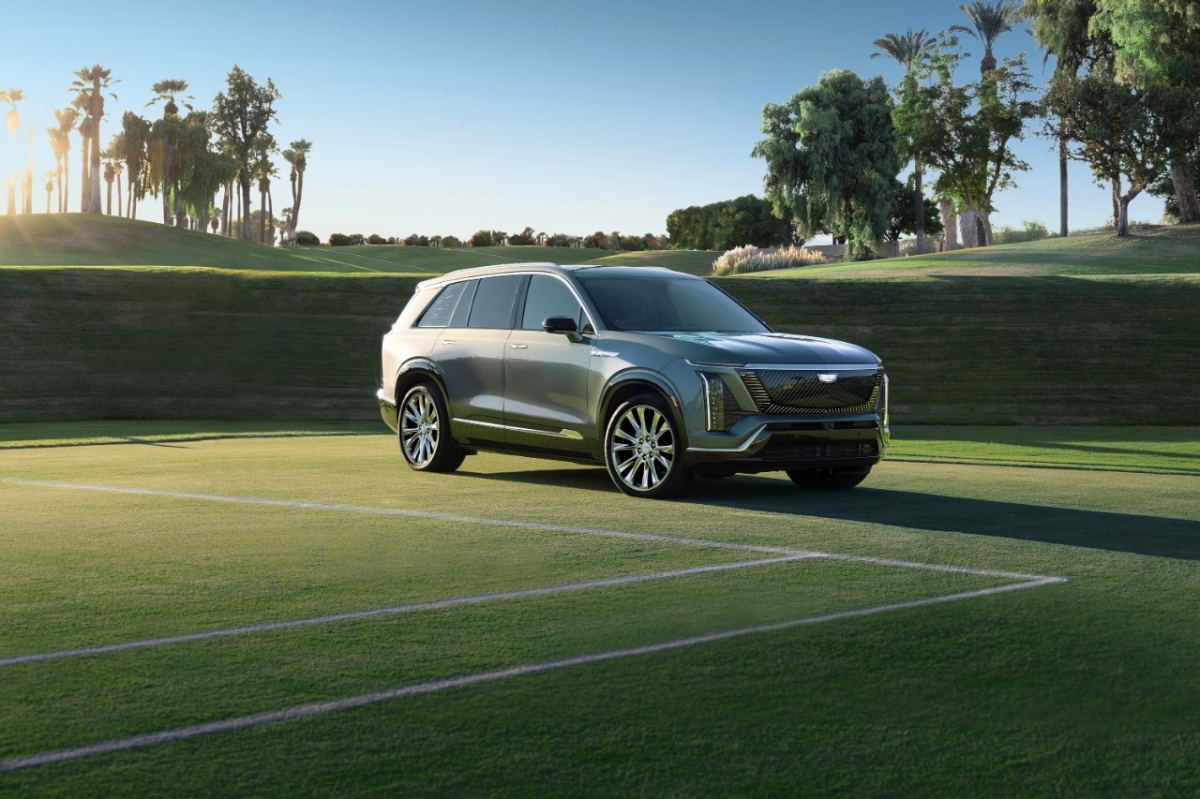
The Cadillac Vistiq recall is a useful reminder that the most important EV safety story is not always the battery.
General Motors is recalling 14,540 Cadillac Vistiq SUVs from the 2026 and 2027 model years because the third-row power-folding seatback may trap an occupant. The NHTSA recall report says the issue relates to certain vehicles with a third-row one-touch power-folding seat. If the seatback encounters an obstruction while folding, it may stop without automatically reversing to release the obstruction.
GearPulse’s view: this is relevant because premium EVs are full of motorized convenience features. That feels luxurious until a family feature creates a child-sized safety problem. The Vistiq recall is not an anti-EV story. It is a warning that automation inside the cabin deserves the same scrutiny as the drivetrain.
What the recall says
The public NHTSA filing lists the recall as 26V394, with GM recall number N262555780. The recall population covers 2026 and 2027 Cadillac Vistiq vehicles, and the defect description centers on the third-row power-folding seatback.
| Recall detail | Public information |
|---|---|
| Vehicle | 2026-2027 Cadillac Vistiq |
| Recall population | 14,540 vehicles |
| NHTSA recall number | 26V394 |
| GM recall number | N262555780 |
| Component | Third-row power-folding seatback |
| Risk | A person, especially a child, may become trapped |
| Reported complaints | Six complaints noted in current reporting |
| Injuries reported | No injuries reported in current reporting |
| Owner notification | Expected to begin August 3, 2026 |
The practical version is easy to understand. A power-folding seat is supposed to make cargo and passenger changes easier. If it stops on an obstruction but does not reverse by itself, a smaller occupant could be pinned until someone uses the controls.
That distinction matters. Motor1 notes the seat does not keep crushing through the obstruction in the same way as the Hyundai power-seat situation that triggered wider attention around the category. But “less severe” is not the same thing as “fine.” A family SUV cannot make escape dependent on a child reaching the right control.
The temporary fix is awkward
Until replacement parts or a permanent remedy are available, dealers can disable the third-row power-folding feature. Motor1 reports that shipments of the 2027 Vistiq were paused on June 8, 2026 while GM works on the issue.
That temporary fix is safe but annoying. Owners may have to choose whether to leave the third row up or down before leaving the dealer because the power-folding function is the way the seat is moved. For a three-row luxury EV, that is not a tiny inconvenience. The third row is part of why buyers choose this body style.
| Owner question | Current answer |
|---|---|
| Can I keep driving? | The recall does not say owners must stop driving, but the seat function needs attention. |
| Is there a final repair? | A permanent remedy is still pending in the public materials reviewed. |
| What can dealers do now? | Disable the power-folding function as an interim step. |
| When will owners hear from GM? | Owner letters are expected in early August 2026. |
| Is this a battery or EV powertrain recall? | No. It is a cabin-seat safety issue on an EV SUV. |
GearPulse’s opinion: the interim repair is exactly the kind of ownership friction premium brands hate. Buyers pay for convenience, then a safety issue can turn the feature off.
Why this matters beyond Cadillac
Three-row SUVs are family machines. Luxury three-row EVs add another layer: big screens, powered seats, electric doors, powered frunks, active suspensions and software-defined convenience. Many of those features are sold as effort reducers.
The risk is that convenience becomes a default assumption. A powered seat should not be treated as harmless just because it is inside the cabin. It is still a moving mechanism with enough force and geometry to create a trap.
The Vistiq is also not a cheap compliance EV. Cadillac introduced it as a luxury three-row electric SUV meant to sit in a serious part of the premium market. That makes the recall more visible. If the cabin technology is part of the value proposition, the safety behavior has to be part of the engineering pitch too.
The larger lesson is simple:
| Feature trend | Safety question |
|---|---|
| One-touch powered seats | What happens when resistance is detected? |
| App and screen controls | Can a passenger escape without perfect UI access? |
| Luxury automation | Does convenience fail into a safe state? |
| Family EV packaging | Are child-sized scenarios tested aggressively enough? |
| Software-dependent fixes | How quickly can a remedy be deployed and verified? |
This is where recalls are useful even when they are uncomfortable. They expose the edge cases glossy launch materials rarely dwell on.
What Cadillac has to prove
The fix should do more than satisfy the paperwork. It has to restore confidence in a feature families may use casually every week.
A good remedy should reverse the seatback when it detects resistance, avoid false confidence, and be easy for dealers to verify. It should also leave owners with clear instructions. A vague “bring it in later” message is not enough when the concern involves children and moving seats.
Cadillac also needs to keep the communication plain. The Vistiq buyer may not care about NHTSA defect language. They care whether their kid, pet, bag or passenger can be trapped by a seat that was supposed to be convenient.
GearPulse’s read is that this recall will not define the Vistiq if GM handles it cleanly. But it will become part of the trust story around luxury EV automation.
Bottom line
The Cadillac Vistiq recall is relevant because it moves the EV safety conversation inside the cabin. Range, charging speed and battery chemistry get the attention, but a family SUV also has to be safe in the ordinary moments: loading cargo, folding seats and moving passengers around.
GM has a clear path: communicate quickly, disable risky behavior where needed, and deliver a repair that makes the third-row power seat fail safe.
The bigger takeaway is for the whole premium EV market. Automation is not automatically luxury. It becomes luxury only when it is predictable, reversible and safe for the smallest person likely to be near it.