
Cadillac’s first Formula 1 season has moved from “new team learning in public” to “new team making a hard call in public.”
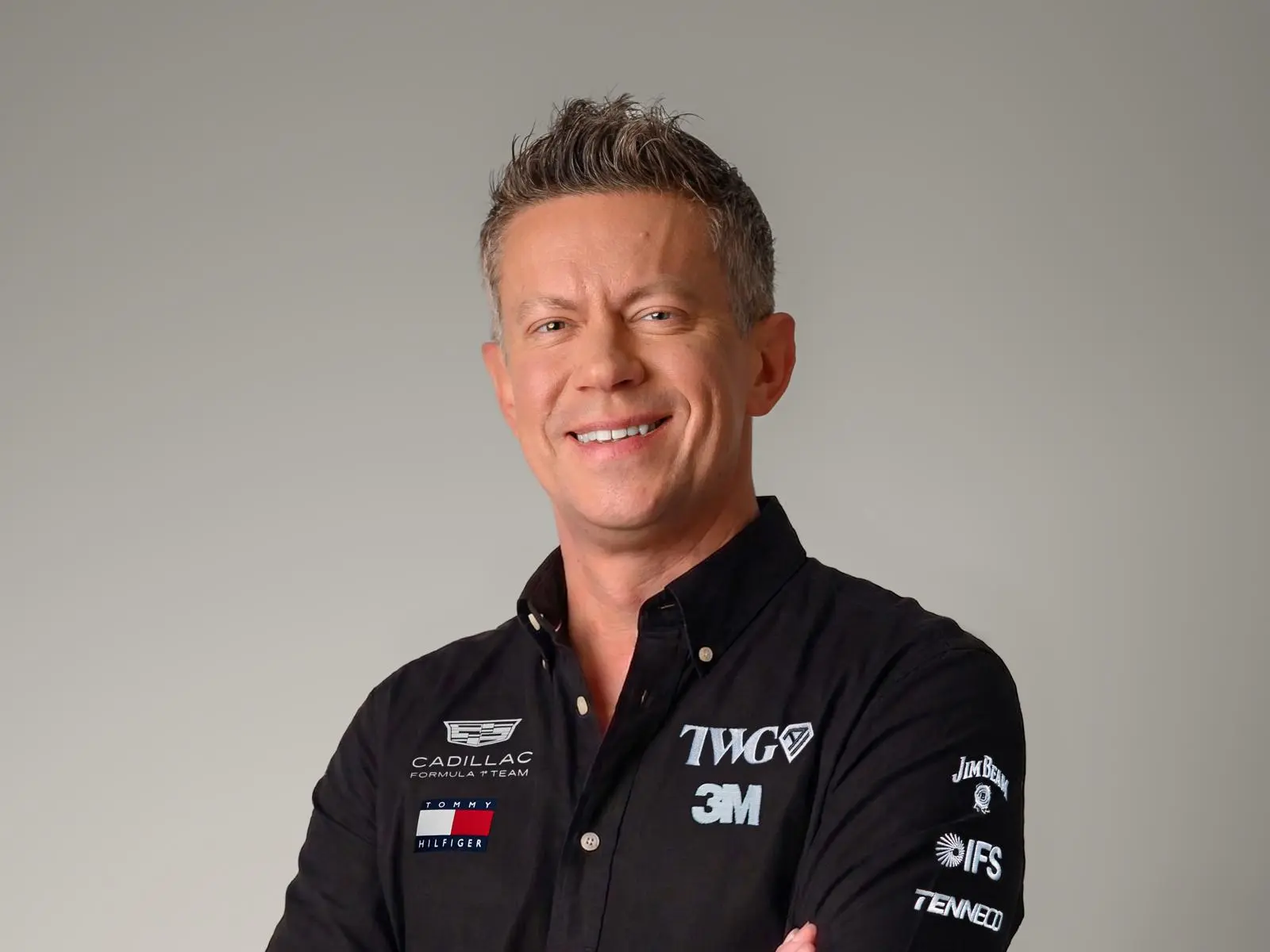
On August 12, Cadillac confirmed Marcin Budkowski as its new Team Principal, replacing Graeme Lowdon before Formula 1 returns from the summer break at Zandvoort. The team describes the move as a planned transition from build phase to racing performance phase. Sky Sports F1, RACER, ESPN/AP pickup and Formula 1’s own homepage treatment all landed the same day, which tells you why this became the strongest Daily Dose story: this is not a summer-break ranking or a recycled future-driver rumour. It is a live leadership reset at the grid’s newest operation.
GearPulse’s view: Cadillac has just made its zero-point debut season harder to grade softly. Lowdon was the credible launch architect. Budkowski is being installed as the performance operator. That is a very different job, and Zandvoort now becomes a management test as much as a race weekend.
Why this rose today
The source stack is unusually clean. Cadillac supplied primary confirmation, quotes from CEO Dan Towriss and Budkowski, and the timing: Budkowski’s on-track leadership begins at the Dutch Grand Prix on August 21-23. Formula 1 published an official backgrounder on Budkowski’s route through Prost, Ferrari, McLaren, the FIA and Renault/Alpine. RACER and AP-style coverage treated the appointment as an immediate replacement. Sky Sports F1 added the harder reporting edge: Towriss said the dismissal was his decision, not a mutual split, and that Lowdon was informed on the morning of the announcement.
That last detail is why this is more interesting than a normal title-change press release. Cadillac’s own language says planned transition. The execution still looks abrupt from the outside. Both things can be true in F1. A team can spend months deciding it needs a different leader, then compress the visible handover into one day because a half-announced succession would destabilize the factory.
The trend signal is also straightforward. Formula 1, Cadillac’s official channels, Sky, RACER, ESPN/AP, Reuters syndication and specialist sites all repeated the story within hours. During a shutdown week with no race sessions, that breadth matters.
Lowdon built the entry. Budkowski inherits the bill.
The cleanest way to read the change is not as a personal verdict on Lowdon. It is a job-description change.
Lowdon’s value was obvious during the build. Cadillac had to get from approval to a real F1 entry with two experienced drivers, a Ferrari customer power-unit bridge, U.S. and U.K. operations, and a team structure credible enough not to look like a marketing experiment. That was the launch phase. GearPulse’s August 6 Cadillac article argued that, despite zero points, the project looked more like a serious operating team than a novelty entrant.
Today’s change moves the bar. Budkowski is not being brought in to prove Cadillac exists. He is being brought in to make the car and the organization improve faster.
Cadillac’s own announcement points directly at that. Budkowski talked about maximizing car development within the cost cap, turning every team function toward competition, improving information flow and making decisions quickly. Those are not ceremonial lines. They identify the problem space: development speed, process quality, race-day execution and whether the team can turn data into lap time before the next poor result becomes normal.
Why Budkowski makes sense on paper
Budkowski’s CV fits the exact part of the project Cadillac says it is entering.
Formula 1’s official profile traces a technical path through Ferrari and McLaren, including aerodynamic leadership, then a move to the FIA across technical and sporting divisions, then Renault/Alpine executive leadership during the Enstone team’s transition into the Alpine era. Cadillac’s own release stresses the same mix: engineering, regulatory and executive experience.
That combination matters for a new team because Cadillac’s problem is not one department. It is the connection between departments. A rookie F1 operation can lose time because the aero group, trackside engineers, reliability team, race strategists and management layer are each solving a slightly different version of the same problem. Budkowski’s strongest on-paper case is that he has seen F1 from the car side, rule-maker side and executive side.
The caveat is just as important: a broad CV does not automatically make a winning team principal. Alpine’s leadership era after the Renault rebrand became turbulent, and Formula 1’s own backgrounder notes several senior exits in the years that followed. Cadillac is not hiring a miracle worker. It is hiring someone who should understand where performance organizations usually leak time.
Reliability is the pressure point
Cadillac’s problem is not that it is pointless. A new team using customer Ferrari power while building toward a future GM power unit was never going to be judged by podiums in August.
The harder problem is incomplete weekends.
Sky Sports F1 reports that Cadillac has had nine Grand Prix retirements between Valtteri Bottas and Sergio Perez across the first 11 rounds, and that both cars have reached the chequered flag in only one of the last seven races. Formula 1’s official Cadillac standings page confirms the simple scoreboard: zero points in every Grand Prix through Hungary.
That is where a leadership change becomes more than optics. Retirements are not only bad results. They destroy the development loop. If one car stops early, the team loses tyre-degradation data, cooling data, race-pace comparison, driver feedback across fuel load and the chance to separate a setup weakness from a reliability weakness. A new team needs mileage more than almost anything else. Cadillac has spent too many Sundays losing it.
Budkowski’s first realistic target is therefore not a point. It is two cars finishing enough races for Cadillac to know whether its upgrades are working.
| Cadillac problem | Why Budkowski’s role matters |
|---|---|
| Too many retirements | Reliability triage needs sharper ownership and faster root-cause loops. |
| No points after 11 rounds | The team needs to turn respectability into occasional midfield threat. |
| Cost-cap development | Wrong upgrade priorities now are expensive twice: money spent and learning lost. |
| Multi-site organization | U.S., U.K. and supplier workflows need clear decision paths. |
| Zandvoort restart | A Sprint weekend gives less practice time and exposes weak processes quickly. |
Bottas and Perez now become evidence
Bottas and Perez were hired because Cadillac needed adults in the car. That logic still works, but the meaning changes under a new team principal.
For Lowdon, experienced drivers helped create the team. For Budkowski, they become a diagnostic instrument. Bottas can tell Cadillac whether the car’s weakness feels like aero instability, energy deployment inconsistency, braking confidence or simple lack of load. Perez can do the same from a career built around tyre management, messy midfield fights and high-pressure Red Bull comparison.
The danger is that both drivers are now also part of the accountability chain. If Cadillac’s car keeps retiring, feedback cannot compound. If the race execution remains slow, veteran drivers can only describe the problem more accurately. They cannot manage the factory from the cockpit.
GearPulse probability read, as editorial analysis rather than betting advice:
| Outcome | Likelihood | Read |
|---|---|---|
| Cadillac scores a first point before the end of 2026 | 30-40% | Still possible through reliability improvement and a messy midfield race, but not the baseline. |
| Both cars finish at Zandvoort | 45-55% | The immediate goal is boring mileage, and recent reliability makes even that non-trivial. |
| Budkowski changes visible race operations within three weekends | 35-45% | Process changes can be quick; car performance changes usually take longer. |
| Cadillac becomes a regular Q2 threat this season | 20-30% | Development can help, but the midfield is moving too. |
| This is mainly about preparing the 2027-2029 organization | 70-80% | The wording and timing point beyond one Dutch GP weekend. |
Zandvoort is an awkward first exam
Budkowski’s first weekend in charge is not a gentle landing.
Formula 1’s Dutch Grand Prix page lists Zandvoort as the August 21-23 return race after the break. It is also a Sprint weekend in 2026, which means one practice session before competitive running starts. For a new team principal, that is a poor environment for slow diagnosis. There is less time to settle the car, less time to calm the garage, and more public consequence if operational habits are messy.
The circuit itself adds another layer. Zandvoort’s banked, flowing layout rewards a car that gives drivers confidence through fast direction changes and traction zones. It is not a pure straight-line power track where Cadillac can hide behind a single number. If the MAC-26 is nervous, fragile or difficult to place, Bottas and Perez will expose it quickly.
The useful target is modest: clean practice, no procedural confusion, both cars through the Sprint/race weekend if possible, and a clear post-event explanation of what improved or failed. That is not glamorous, but for Cadillac it would be meaningful.
The awkward optics
Cadillac has to manage two narratives at once.
The first is the official story: Lowdon built the foundation, Budkowski leads the performance phase, and the transition was planned. That is coherent. New teams often need different leaders at different stages.
The second is the paddock story: a founding team principal has been replaced halfway through a debut season in which the team has no points and too many retirements. Sky’s reporting that Towriss called it his decision, not a mutual one, makes that impossible to sand down completely.
GearPulse’s read is that the uncomfortable version is probably the more useful one. If Cadillac genuinely believes it needs a sharper performance structure, making the change during the shutdown is logical. Waiting until the end of the season would protect appearances but burn half a year of learning. The question is whether the new structure actually shortens decisions or just changes who answers for them.
Fun facts with a point
Cadillac is the first completely new F1 entrant in more than a decade, which makes this leadership change unusually visible. Haas entered in 2016 and needed years to prove when its lean model was smart and when it was limiting. Cadillac is trying a different version: American manufacturer backing, a future GM power-unit plan, Ferrari supply in the meantime, and an experienced driver pairing from day one.
Budkowski’s FIA stint is also relevant. He worked in technical and sporting areas and was involved in the halo era. That does not make him a rulebook cheat code, but it does give Cadillac a leader who should understand how the regulatory system thinks. Under a cost cap and a new technical cycle, knowing which questions to ask the FIA can be as valuable as knowing which part to build next.
Why this beat the other candidates
McLaren/Piastri experimentation had fresh RACER treatment and is useful title-race context, but it overlaps with recent GearPulse McLaren Hungary and rotating-wing pieces without a new team policy or technical confirmation.
RaceFans’ team-mate head-to-head scores are a good summer-break data feature, but they are analysis rather than a same-day F1 development with primary confirmation.
The Race’s 2026 disappointments verdict is readable, especially on Aston Martin-Honda, but GearPulse just covered Honda’s new combustion/drivability update on August 11 and Aston’s Zandvoort reset has been heavily treated.
Ferrari/Hamilton title-pressure coverage remains important, but the most current items are mostly second-half framing rather than a new Ferrari decision. It stays on the watchlist if Ferrari confirms upgrades, strategy changes or power-unit penalties.
Cadillac won because it combines official confirmation, mainstream and specialist pickup, a clear before/after, and a direct connection to the next race weekend.
Bottom line
Cadillac’s Budkowski appointment is not just a personnel note. It is the moment the team stopped being judged only as a brave new entrant and started being judged as a racing organization with a performance problem.
Lowdon’s chapter was about getting Cadillac onto the grid. Budkowski’s chapter is about making that grid place competitive enough to matter. The first proof will not be a podium or probably even points. It will be whether Cadillac can leave Zandvoort with two running cars, cleaner decisions and evidence that the next phase is more than a press-release phrase.
GearPulse’s bottom line: Cadillac has changed the person at the top. Now it has to prove the problem was speed of execution, not just speed of car.
Support the site at buymeacoffee.com/gearpulse.site.