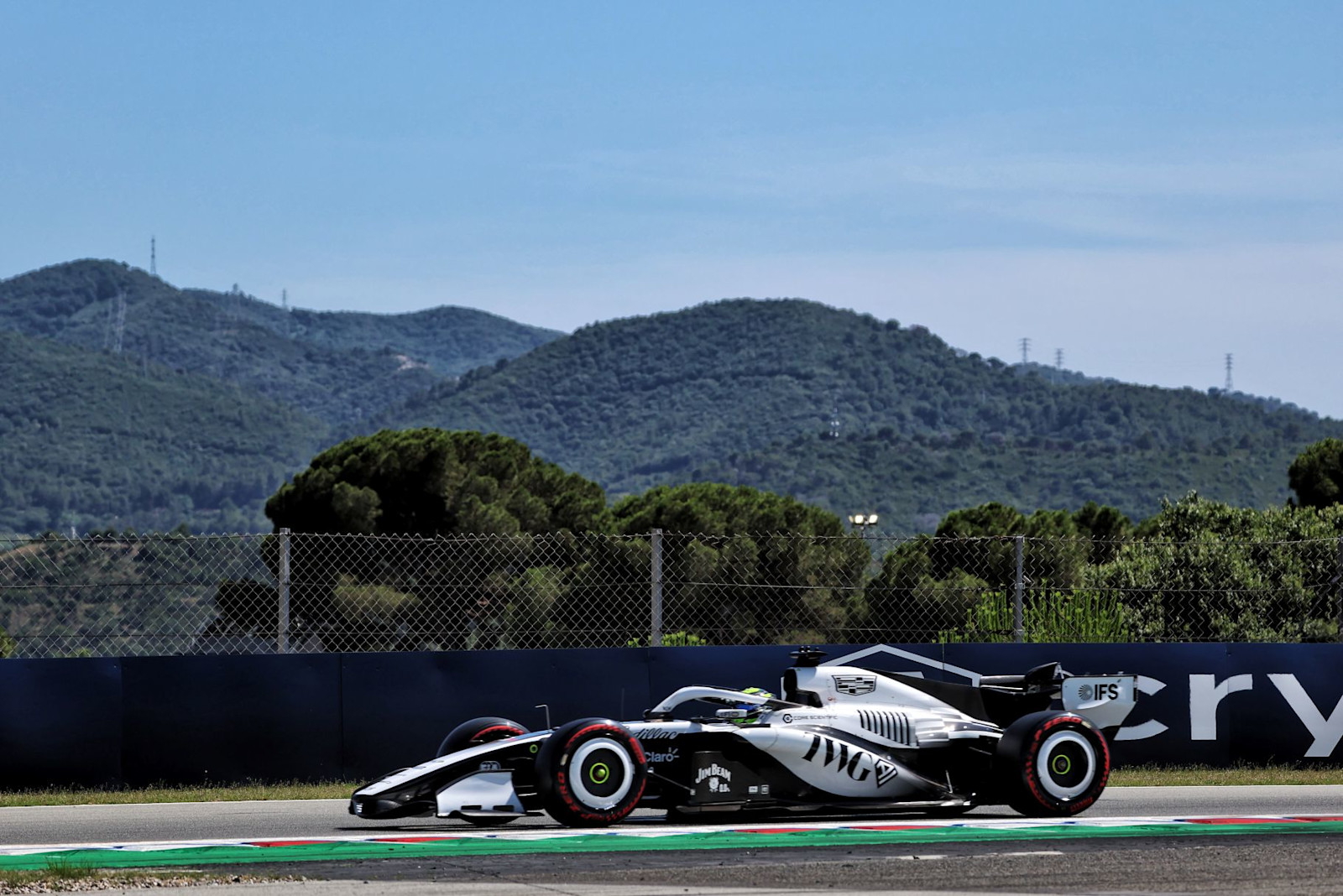
Cadillac’s Austrian Grand Prix upgrade is not just another bullet point on a race-weekend preview. It is the first proper public audit of whether Formula 1’s newest team can develop at the speed the midfield demands.
The team says the MAC-26 will run a major aerodynamic update at the Red Bull Ring, including new sidepods, revised bodywork and a new floor. That matters because those are not decorative parts. On a modern F1 car, the floor and sidepod package are central to how the car produces downforce, keeps airflow attached, manages cooling and gives the driver a stable platform through braking, kerbs and traction zones.
Cadillac is still chasing its first points of 2026. That makes the headline easy to overcook. A new floor does not automatically turn a new entrant into a Q3 car. But Austria is still the right place to learn something meaningful.
Why this became today’s story
This was the most useful F1 story of the day because it sits at the intersection of three things: official confirmation, immediate race-weekend relevance and a wider question about the health of F1’s 11-team era.
Cadillac confirmed the package in its own Austrian GP preview. Formula 1 then elevated the story on its official site, and specialist outlets including Motorsport.com, RACER and SB Nation picked it up. That spread is a good trend signal: not viral gossip, not a contract rumor, but a paddock-relevant development with enough technical and competitive meaning to stand up on its own.
It also avoids duplicating GearPulse’s recent F1 angles. We have already covered the 2027 engine compromise and the broad Austrian GP setup. This is narrower and fresher: Cadillac’s first big development exam.
What Cadillac is actually trying to prove
For a new F1 team, the first season is rarely about headline results. It is about proving the operating loop works.
That loop has four parts:
| Step | What it means for Cadillac |
|---|---|
| Identify the weakness | Understand where the MAC-26 is losing time: aero efficiency, balance, cooling, tyre use or reliability. |
| Design the fix | Turn simulation and factory work into parts that should move the car toward the midfield. |
| Deliver under calendar pressure | Get the package built, shipped and fitted while races arrive quickly. |
| Correlate at the track | Find out whether the real car behaves like the data promised. |
The last step is the brutal one. A team can bring an impressive-looking floor and still discover that it narrows the setup window, overheats tyres, upsets braking stability or simply fails to match the model. For Cadillac, Austria is less about one Sunday result and more about whether the car gives Perez and Bottas the feedback needed to keep developing in the same direction.
Why Austria is a sharp test
The Red Bull Ring looks simple because it is short. That is misleading.
Cadillac’s own race hub frames Austria as a compact circuit where long straights, uphill braking zones, traction and precision are constant stress points. The lap is only about 4.3 km, but mistakes get amplified because there are so few corners to recover lost time.
That is useful for an upgrade test. A cleaner floor and sidepod package should show up in a few obvious places:
- better traction out of the uphill corners;
- more stability under heavy braking;
- less balance loss through the downhill section;
- improved tyre control over a stint;
- a smaller gap to the back of the midfield in qualifying.
The caveat is reliability. Cadillac’s early season has included enough mechanical and overheating pain that raw aero gain is only half the story. If the new bodywork helps lap time but makes cooling tighter, Austria’s altitude, temperatures and repeated acceleration zones could expose that quickly.
The Perez-Bottas comparison matters
This is also a driver-measurement weekend.
Sergio Perez has been the more visible yardstick for Cadillac’s race progress, including the near-points Monaco moment that disappeared after a penalty. Valtteri Bottas brings a different kind of relevance to Austria: he has won at the Red Bull Ring, taken poles there and scored his first F1 podium at the circuit in 2014.
That does not make Bottas a lock to suddenly drag Cadillac into the top 10. It does mean his feedback should be especially valuable. Austria is familiar enough to both drivers that the team can separate some car behavior from driver adaptation. If both drivers report the same improvement, Cadillac can trust the direction more. If one side of the garage finds the package and the other does not, the weekend becomes a setup investigation.
GearPulse’s view: Perez probably remains the likelier first-points candidate because he has already shown Cadillac’s closest race-day upside. Bottas may be the better diagnostic tool this weekend because his Austria history gives the team a richer comparison point.
What success should look like
The sensible benchmark is not “Cadillac scores points.” That is possible, especially if Austria’s attrition rate bites, but it should not be the base expectation.
A realistic success case looks more like this:
| Outcome | Why it would matter |
|---|---|
| Both cars closer to Q2 | The upgrade has translated into real qualifying pace. |
| No repeat cooling drama | The aero package has not compromised reliability. |
| Perez and Bottas converge on setup | The car’s operating window is becoming clearer. |
| Race pace improves after the first stint | The floor is helping tyre life, not just one-lap grip. |
| Cadillac beats at least one established team on merit | The midfield gap is shrinking for reasons beyond chaos. |
If Cadillac gets two or three of those, Austria is a step forward even without points. If the car is still three laps down or fighting the same reliability problems, the upgrade becomes evidence of how steep the climb still is.
The bigger F1 context
Cadillac’s arrival matters because F1 has spent years talking about growth while keeping the grid relatively closed. An 11th team only strengthens the sport if it can become credible, not just present.
That is why this weekend is interesting beyond Cadillac fans. A struggling new entrant can become background noise very quickly. A new entrant that visibly improves through the season changes the midfield. It creates more Q1 jeopardy, more strategy variation, more pressure on underperforming established teams and a clearer proof that a new operation can still build itself into F1 relevance.
Fun fact that underlines the challenge: Austria’s short lap often compresses qualifying gaps, which can make a small upgrade look more dramatic on the timing screen. The flip side is that traffic, track limits and one imperfect braking zone can make progress harder to read. Cadillac will need more than a single headline lap to know what it has.
Bottom line
Cadillac’s Austria package is not a miracle cure. It is a credibility test.
New sidepods and a new floor are exactly the kind of upgrade a team brings when it believes it understands the car’s biggest limitations. Now the Red Bull Ring gets to check that belief in public.
The most likely outcome is still a weekend outside the points, but with a narrower gap to the midfield if the package works. The more important result will be whether Cadillac leaves Austria with clean correlation, stable reliability and two drivers saying the same thing about the car.
That would be real progress. Not glamorous, not viral, but exactly how a new F1 team starts becoming more than a logo on the timing screen.
Support the site at buymeacoffee.com/gearpulse.site.