
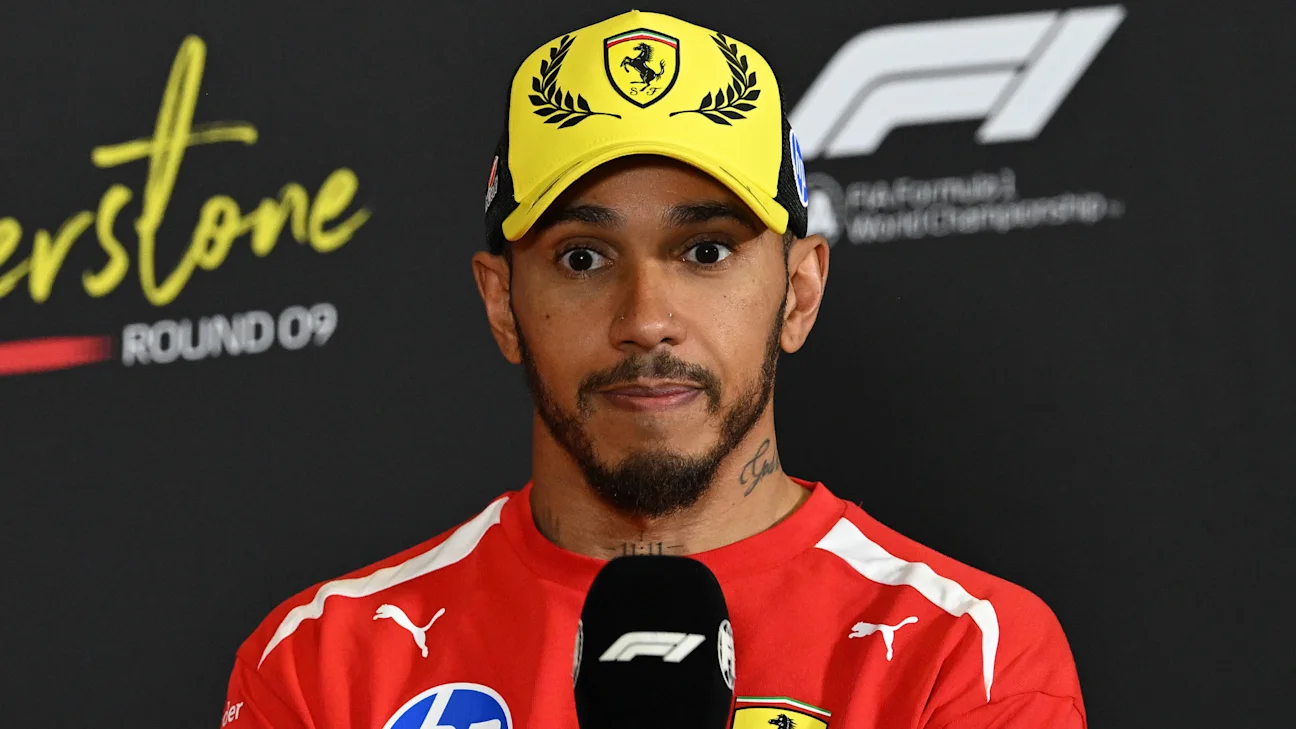
The British Grand Prix did not need another controversy to be interesting. Charles Leclerc had already won for Ferrari, Kimi Antonelli had already lost a huge Mercedes result, and Max Verstappen’s late crash had already turned a lively Silverstone race into a nervous finish.
Then race control told everyone the Safety Car was coming in.
Then it did not.
The FIA’s official race-control messages show the sequence clearly enough: Safety Car deployed at 16:18, lapped cars allowed to overtake at 16:25, “Safety Car In This Lap” at 16:27, “Safety Car Deployed” also at 16:27, another “Safety Car In This Lap” at 16:29, and the chequered flag at 16:31. Sky Sports F1, Autosport, RACER and The Race all reported the FIA explanation: the underlying procedure was followed, but the Safety Car message was displayed in error because of a software problem.
That makes this today’s Daily Dose of F1 story. GearPulse covered Leclerc’s win yesterday. The new development is not who won. It is what Silverstone exposed about modern F1’s procedural layer.
GearPulse’s view: the result is not the problem. The trust layer is.
The legal answer and the fan answer are different
The FIA’s position is straightforward. Once lapped cars have been allowed to overtake the Safety Car, the race must complete the required follow-up lap before the Safety Car can come in. At Silverstone, that timing left no proper racing lap before the finish.
That is the legal answer.
The fan answer is messier. Viewers, teams and drivers saw a message that suggested a restart was coming. Ferrari had stopped both Leclerc and Hamilton for soft tyres. George Russell had stayed out and inherited second. Hamilton was sitting behind his former Mercedes team-mate with fresh rubber and no chance to use it. Then the race ended in formation.
There is no need to pretend this was a stolen race. FIA classification has Leclerc first, Russell second and Hamilton third, and the order is official. But it is also too easy to wave away the confusion as a harmless screen glitch. When race control sends the wrong message at the end of a Grand Prix, it changes how everyone understands the final minutes in real time.
That is why this is a trust problem. The sporting procedure can be correct and the product can still feel broken.
What actually happened
The compressed timeline matters because it separates process from perception.
| Time | Official/public signal | GearPulse read |
|---|---|---|
| 16:18 | Safety Car deployed after Verstappen’s late incident | Race control had a genuine neutralization to manage. |
| 16:25 | Lapped cars allowed to overtake the Safety Car | The restart clock effectively became very tight. |
| 16:27 | ”Safety Car In This Lap” shown, then “Safety Car Deployed” | This is the confusion point, not the original Safety Car call. |
| 16:29 | Another “Safety Car In This Lap” message | The public feed still looked less clean than it should. |
| 16:31 | Chequered flag | The race ended under control, not under green-flag racing. |
Autosport’s report lines up with that reading: the message initially implied a final-lap shootout, then was reversed. RACER explained the regulation angle: the lapped-car instruction came too late in the race to permit a proper restart before the chequered flag. The Race made the same point more bluntly: restarting would have breached the regulation.
That distinction is essential. The FIA did not need to invent a post-race justification for keeping the Safety Car out. The rules gave it one. What the FIA now has to explain, internally if not publicly, is why the wrong race-control message reached teams and viewers in the highest-leverage minute of the race.
Ferrari made a rational call and got a weird result
The biggest strategy consequence fell on Ferrari’s side of the podium.
Formula 1’s own post-race interview with Fred Vasseur framed the Hamilton call as a risk-management decision. If Ferrari left Hamilton on old tyres and Russell stopped, Mercedes could attack with fresh softs. If Ferrari stopped Hamilton and Russell stayed out, Russell would jump him if there was no restart. Ferrari protected against the green-flag threat, and the race never gave Hamilton the chance to respond.
That does not make Ferrari foolish. It makes the decision tree ugly.
| Ferrari option | Upside | Downside |
|---|---|---|
| Pit Hamilton | Fresh tyres for a likely restart, better defence or attack if racing resumed | Lost track position to Russell when the race stayed neutralized |
| Leave Hamilton out | Kept second on the road if the race ended under Safety Car | Exposed him to Russell on new softs if racing resumed |
GearPulse’s read is that Ferrari made the more defensible competitive call. You plan for the race to restart until it cannot restart. The problem is that the messaging briefly made the restart look more certain than it was.
That is why the software-error explanation has weight beyond PR cleanup. Incorrect information does not just confuse fans. It also makes post-race strategy judgments noisier than they should be.
Mercedes gained points and lost control of the narrative
Mercedes left Silverstone with Russell second and Antonelli still leading the drivers’ championship, but the race’s ending kept the team’s afternoon from becoming a clean recovery story.
Russell benefited from staying out. Hamilton stopped and lost the place. Toto Wolff’s public line, as reported by Sky Sports F1, was the grown-up one: the regulations were followed, even if the spectacle suffered. That matters because Mercedes has more history than anyone with late-race Safety Car procedure after Abu Dhabi 2021.
Russell’s second place was not fake. It was a legitimate consequence of track position and rule timing. But it was also a reminder that neutralizations do not just freeze races. They redistribute risk. Ferrari bought tyre performance. Mercedes bought position. The software message made it look for a moment as if tyre performance would matter again.
It did not.
For Antonelli, the Safety Car story almost hides the deeper loss. Formula 1 and the FIA both noted the left-front wheel-shield issue that dropped him out of the points after a weekend that had looked like his strongest control statement of the season. The race-control mess should not erase that. Mercedes’ bigger title concern is still reliability and execution, not whether Russell was lucky to finish second.
Why this one trended
This story had the right combination of timing, clarity and argument. It was not just “fans angry after Safety Car finish.” It had:
- an official FIA timing trail,
- a clear FIA explanation repeated by multiple reliable outlets,
- an immediate strategic consequence for Ferrari and Mercedes,
- a live-event perception gap visible to teams, viewers and broadcasters,
- and a wider rules debate because F1 still carries the institutional memory of Abu Dhabi 2021.
The Guardian’s Monday analysis pushed the broader point: late-race Safety Car procedure may need another look if F1 wants fewer anticlimactic endings without turning the championship into manufactured entertainment. That is the hard balance. F1 should not bend rules to create a final-lap show. It also cannot afford communication systems that make the official process look improvised.
The most defensible reform is not an automatic red flag, a guaranteed green-white-checkered finish, or a made-for-TV restart rule. Those all carry competitive distortions. The more realistic short-term fix is cleaner race-control output: no automated or semi-automated public message should fire unless it matches the actual regulatory state of the race.
That sounds small until it decides what millions of people think they are about to watch.
Likelihood board after the Silverstone confusion
These are editorial reads only, not betting advice and not based on private paddock data.
| Scenario | Likelihood | Why |
|---|---|---|
| FIA tightens race-control messaging checks before Spa | 50-60% | A visible software-error explanation invites a procedural fix. |
| F1 opens a wider late-race Safety Car rules debate | 35-45% | The topic is loud, but rule changes are politically difficult. |
| Silverstone changes the official race result | Under 1% | The FIA classification and explanation both point the other way. |
| Teams become more conservative under late Safety Cars | 20-30% | Ferrari’s call was rational, but the pain will stay fresh. |
| The Abu Dhabi comparison keeps resurfacing this week | 70-80% | It is the unavoidable reference point whenever late Safety Car rules decide a finale. |
The important caveat: F1 should be careful not to solve a communication failure by creating a sporting gimmick. The Silverstone ending was unsatisfying. That does not mean the race director should be empowered to invent a restart when the written procedure says otherwise.
Fun fact with a sting
The full Safety Car is not common as a race-ending device. Sky Sports F1 noted that Sunday’s British GP was the first Formula 1 race to finish behind the full Safety Car since the 2022 Italian Grand Prix.
That scarcity is part of why the reaction was so sharp. Fans are used to Safety Cars changing strategy. They are not used to a final-lap message promising one reality, then the track delivering another.
Silverstone also drew a record-breaking weekend crowd reported by Formula 1 at 564,000. That makes the optics worse. A huge audience got a huge race, then a finish that needed a rulebook and a software footnote.
Bottom line
The FIA’s explanation is strong enough to protect the result. Leclerc’s British GP win does not need an asterisk, Russell’s second place is real, and Hamilton’s lost shot at attacking on soft tyres is the consequence of a strategic gamble meeting the rulebook.
But the explanation is not strong enough to make the episode harmless.
F1 now runs on layers: drivers, teams, race control, timing systems, public messages, broadcast graphics and official documents. When those layers disagree in the final minutes of a Grand Prix, the sport can be procedurally correct and still look confused.
That is the lesson from Silverstone. The race did not need a manufactured restart. It needed the information system to be as precise as the regulation it was supposed to communicate.