The electric BMW M3 story is not really about whether an EV can be quick. That argument ended a while ago.
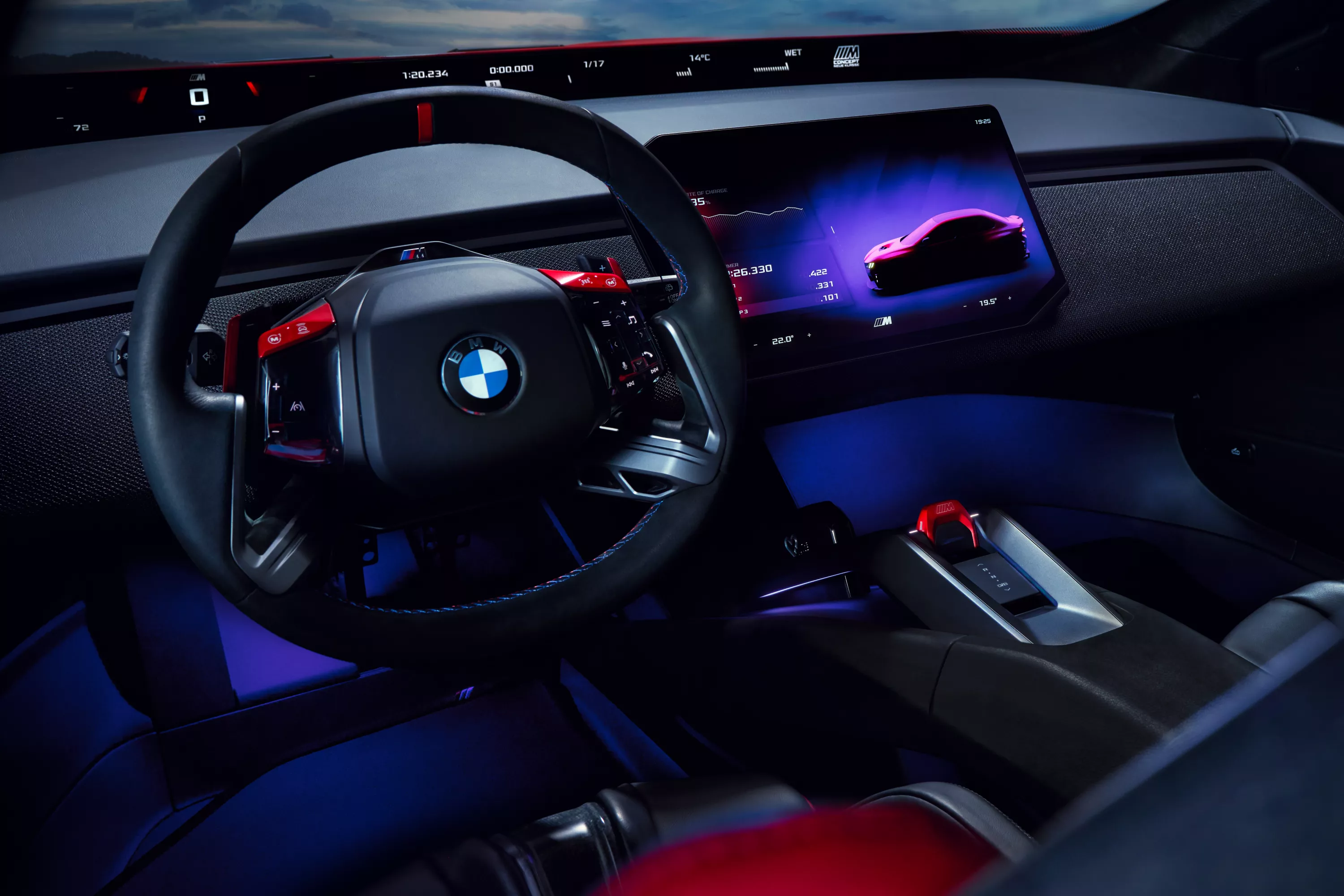
The better question is whether BMW can make an electric M3 feel like an M3 when the engine, gearbox drama and old mechanical rituals are gone. Motor1 reports that BMW’s electric sports sedan will wear the M3 badge, with the electric model expected first and the next combustion M3 following later. BMW has not published a full production spec sheet yet, but its own M Concept Neue Klasse materials make the direction clear: four electric motors, BMW M eDrive, the Heart of Joy control computer, M Dynamic Performance Control and 800-volt Neue Klasse technology are the foundation.
GearPulse’s view: this is relevant because BMW is choosing the hard path. It could have hidden the EV behind a new sub-brand and protected the M3 badge from comparison. Instead, it appears ready to let the badge carry both combustion and electric versions. That is braver, and riskier, because M3 buyers are not only buying acceleration. They are buying memory.
What BMW has actually shown
BMW’s official M Concept Neue Klasse page calls the car a preview of the next generation of electric BMW M models, not a production car for sale. The official technology section says the concept uses two drive units, four electric motors, M Dynamic Performance Control and the Heart of Joy computer for integrated wheel-by-wheel control of drivetrain and braking.
BMW also says the first M vehicles with Neue Klasse technology are planned for 2027. The Heart of Joy press material gives more engineering context: BMW says the control unit handles drivetrain, brakes, charging, recuperation and steering subfunctions, processes information much faster than previous systems and will benefit every fully electric Neue Klasse model.
| Item | What is official | What is still open |
|---|---|---|
| Concept role | Preview of future electric BMW M design and technology | Final production body, trim names and pricing |
| Drivetrain idea | Up to four electric motors with M eDrive | Final output and battery details |
| Control system | Heart of Joy plus M Dynamic Performance Control | How it feels outside controlled demos |
| Timing | First M Neue Klasse models planned for 2027 | Exact market launch and model sequencing |
| Badge | Motor1 reports the EV will use M3 | BMW has not published a final consumer configurator |
That last row is the emotional one. BMW can explain control software all day, but an M3 badge creates an instant standard. People will compare it to the E30, E46, F80, G80 and every argument those cars started.
The badge makes the EV harder to dismiss
Calling it M3 would be a loud statement: BMW believes the electric car belongs in the same bloodline, not next to it.
That matters because performance EVs have often won the spreadsheet and lost the pub argument. They are brutally quick, technically impressive and sometimes oddly forgettable. BMW M cannot afford that. A fast electric sedan with no character would be a good EV and a disappointing M3.
The official technical choices show BMW understands the problem. Four motors and wheel-individual control are not there just to make a launch-control number look silly. They are there to shape rotation, braking feel, traction and repeatability. The Heart of Joy pitch is basically BMW saying: the new engine room is software, but the job is still driver confidence.
The gas M3 may help the electric one
BimmerLife cites BMW M sales boss Sylvia Neubauer saying the electric and combustion M3s should be in the same pricing ballpark, while also noting that some buyers will still choose the combustion car. That is the sane approach.
BMW does not need every M loyalist to convert immediately. It needs enough of them to drive the electric car and admit it belongs in the conversation. Keeping a combustion M3 alive gives BMW cover to be ambitious with the EV rather than trying to make one car please everyone.
| Buyer type | What BMW has to prove |
|---|---|
| Existing M3 owner | Steering, brake blending and repeat lap feel matter more than peak power. |
| EV performance buyer | The M badge must add chassis intelligence, not just cost. |
| Daily driver | Range, charging and software reliability cannot be afterthoughts. |
| Skeptic | The car has to feel playful, not merely heavy and fast. |
The danger is obvious. If the electric M3 is brilliant in a straight line but numb everywhere else, the badge will amplify the disappointment. If it is sharp, calm and repeatable, the same badge could make BMW’s EV transition feel personal rather than corporate.
The bottom line
BMW’s electric M3 gamble is fascinating because it puts the company’s most argued-over performance badge directly into the EV era.
The specs will matter when BMW publishes them. The horsepower number will be shared everywhere. But the real test is smaller and harder: does the car make a driver trust the front axle, trail the brake naturally, place the car precisely and want another corner?
If BMW gets that right, the electric M3 will not need to apologize for the missing engine. If it gets that wrong, no amount of power will protect the badge.