
The Austrian Grand Prix qualifying story is not only about who starts first. The sharper question is how Formula 1 judges intent, lift-off discipline and advantage when a decisive lap meets a yellow flag at exactly the wrong moment.
That is why this became today’s Daily Dose of F1.
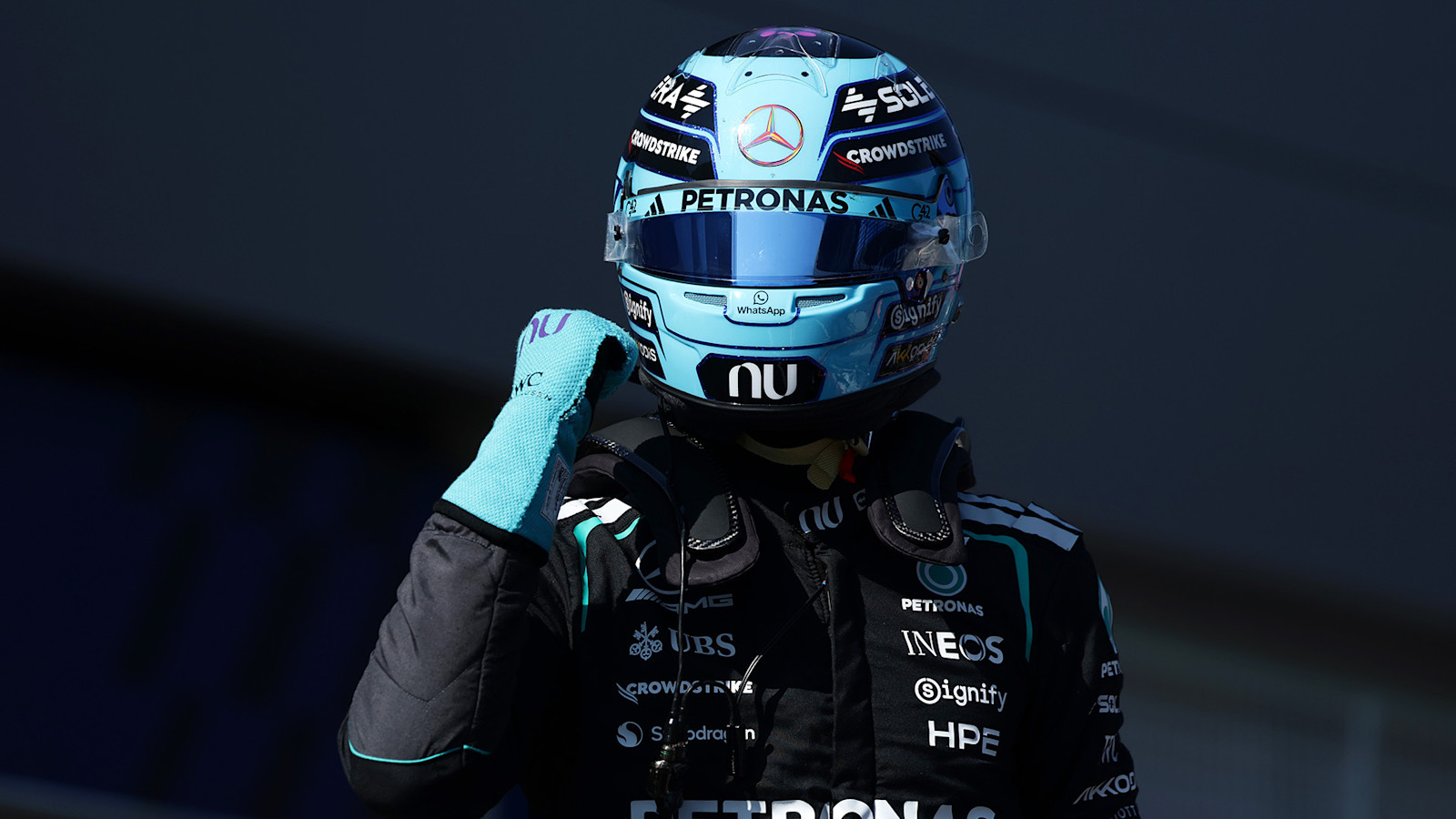
At the Red Bull Ring, George Russell took pole for Mercedes ahead of Ferrari’s Charles Leclerc and Lewis Hamilton after Max Verstappen’s late crash brought out yellow flags in Q3. The result was official, but the debate arrived quickly: Russell’s lap included a yellow-flag zone, and the public question became whether he had done enough to slow.
The FIA and Formula 1 both treated the outcome as valid. Mercedes also framed the session as a clean pole day for Russell. Specialist coverage from Motorsport.com, Sky Sports F1 and The Race all landed on the same pressure point: the lap was fast enough to win the session, but the explanation around the yellow flag became the part everyone wanted to inspect.
That is a better story than a simple “Mercedes is quick” headline. GearPulse covered Mercedes’ Friday rebound yesterday. Today’s development is materially different: it is about how a modern F1 qualifying result can hinge on rules interpretation as much as car performance.
Why this was the day’s strongest F1 story
The best daily F1 story needs more than noise. This one had the full stack: an official result, a primary team source, multiple reliable F1 outlets, an immediate race-weekend consequence and a rules angle that will still matter after Austria.
It also had trend gravity. A normal pole report is routine. A pole decided after a late Verstappen crash, with Ferrari on the front row battle line and Mercedes needing to prove its Barcelona wobble has not become a pattern, is much bigger. Add yellow-flag debate and the story moves beyond one team.
The skipped alternatives were weaker. Another Cadillac upgrade follow-up would duplicate GearPulse’s June 25 piece unless the car produced a clear new breakthrough. A generic qualifying recap would be too close to the site’s Austria qualifying preview. A broad “Ferrari is back” angle had substance because Leclerc and Hamilton were close, but it lacked the official-rule tension that made this result the paddock conversation.
What the yellow flag changed
Yellow flags are supposed to do two things at once: protect marshals and drivers, and remove any sporting advantage gained in a danger zone. That sounds simple until it arrives during the last seconds of Q3.
Drivers do not always need to abandon a lap under a single yellow flag, but they must visibly slow and be prepared to change direction or stop. The hard part is proving that standard from the data the FIA sees and the television picture fans see. A driver can lift, lose time in one micro-section, still improve across the lap and leave viewers feeling the result looks counterintuitive.
That is the Austria problem in one sentence. F1’s rule is not “any yellow flag automatically deletes the lap.” It is closer to “did the driver respond properly to the danger?” That makes the stewards’ evidence more important than the timing graphic.
GearPulse’s view: that is defensible as a sporting principle, but it is not always satisfying as a viewing product. If the fastest lap of qualifying happens under visible yellow conditions, fans need the decision to be explained quickly and concretely. Otherwise the result looks legal in the documents and messy in the conversation.
Russell’s pole is still a performance signal
The rules debate should not erase what Russell did.
Mercedes came into Austria with two different questions around it. The first was competitive: could it convert Friday pace into a genuine front-row car? The second was psychological: after Barcelona hurt the team’s title rhythm, could it deliver a clean high-pressure Saturday?
Russell answered both more strongly than Friday alone could. The Red Bull Ring is short, which compresses gaps and makes qualifying unusually unforgiving. There are only so many corners to repair a small mistake. Traffic, track limits and preparation laps all become amplified because the lap is over so quickly.
That makes pole meaningful even with the caveat attached. Russell had to be fast enough before the yellow-flag debate mattered.
For Mercedes, the bigger gain is strategic. Starting first at Spielberg lets the team control the opening stint, protect tyres in cleaner air and avoid being trapped in the DRS train that can form when several cars sit within a few tenths. It also gives Russell a direct way to stay relevant in a season where Kimi Antonelli’s points lead has often made him the headline Mercedes driver.
Ferrari should not be treated like a footnote
The other reason this result matters is Ferrari.
Leclerc and Hamilton being right there turns Sunday into a more interesting test of Mercedes than Friday suggested. Ferrari’s Barcelona win with Hamilton already changed the emotional shape of the season. Austria qualifying now gives Ferrari a second straight weekend where it can look Mercedes in the eye rather than simply wait for an error.
The comparison is useful:
| Team | What qualifying suggested | Sunday caveat |
|---|---|---|
| Mercedes | Russell has enough one-lap authority to lead the field on merit. | Clean air helps, but tyre temperature and DRS defence still decide the race. |
| Ferrari | Leclerc and Hamilton are close enough to make Mercedes work immediately. | Race pace needs to match qualifying sharpness, not just one-lap balance. |
| Red Bull | Verstappen’s crash damaged the session, but not his relevance at home. | Recovery pace is possible, yet Spielberg traffic can make progress expensive. |
| McLaren | The weekend threat remains real even without owning the headline. | It needs execution and tyre life to turn pace into pressure. |
The most likely race shape is not a runaway. It is a front group where Mercedes has track position, Ferrari has momentum, Red Bull has a recovery story and McLaren has enough underlying pace to complicate strategy.
Verstappen’s crash made the story bigger
Verstappen crashing late at the Red Bull Ring is a news multiplier by itself. It happened at his team’s home race, in the pressure phase of qualifying, and it directly shaped the yellow-flag environment around the pole lap.
That does not mean the crash deserves melodrama. Drivers push hardest at the end of Q3 because that is what the format demands. The Red Bull Ring also encourages risk: short lap, high penalty for a small mistake, and several corners where the car is loaded and the track edge arrives quickly.
But the timing matters. A late crash by Verstappen did not merely affect his own grid position. It forced everyone else into the split-second judgment zone that F1’s yellow-flag rules create.
Fun fact that helps explain the stakes: the Red Bull Ring’s current F1 layout is only 4.326 km, with just 10 listed corners. On a lap that compact, one lift can look tiny on the stopwatch and still be decisive in the result.
The caveat F1 should care about
This is not an argument that the result should be overturned. The FIA had access to data that viewers and journalists do not. If the stewards were satisfied that Russell complied, the classification stands.
The caveat is communication.
F1 has spent years making timing graphics, onboard footage, mini-sectors and radio messages part of the live product. That means fans now see enough to question decisions, but not always enough to understand them. When a yellow-flag call decides pole, a short official explanation is not a luxury. It is part of maintaining trust.
The sport does not need every stewarding decision to become a legal seminar. It does need the decisive ones to be readable. Show the lift. Show the delta. Explain why the lap was accepted. Then the conversation can move from suspicion to analysis.
GearPulse’s race read
Here is the editorial probability board for Sunday, not betting advice and not a prediction model:
| Outcome | Likelihood | Why |
|---|---|---|
| Russell converts pole into the win | 30-40% | Track position is powerful, and Mercedes has looked steady across the weekend. |
| Ferrari wins from close range | 25-35% | Leclerc and Hamilton are close enough to attack if Mercedes struggles on tyres. |
| Verstappen reaches the podium | 20-30% | Home-race recovery pace is plausible, but traffic and strategy must cooperate. |
| McLaren becomes the race-day spoiler | 15-25% | Its long-run threat may be better than the qualifying headline suggests. |
The key variable is not raw speed. It is whether the leader can stay out of DRS danger after the first few laps and after the first stop. Austria can turn one small tyre phase into a long defensive afternoon.
Bottom line
Austria qualifying gave F1 the exact kind of story that makes the sport compelling and uncomfortable: a fast lap, a late crash, a legal result and a lingering argument over how the rule was applied.
Russell earned the sporting headline. Ferrari made sure Mercedes cannot relax. Verstappen’s crash turned Q3 into a rules test. The FIA made the call, but F1 should still want the explanation to be more visible when yellow flags intersect with pole position.
GearPulse’s read: the result stands, and Mercedes starts Sunday with the best hand. The bigger lesson is that in modern F1, milliseconds are not the only margin. Trust in the process is one too.
Support the site at buymeacoffee.com/gearpulse.site.