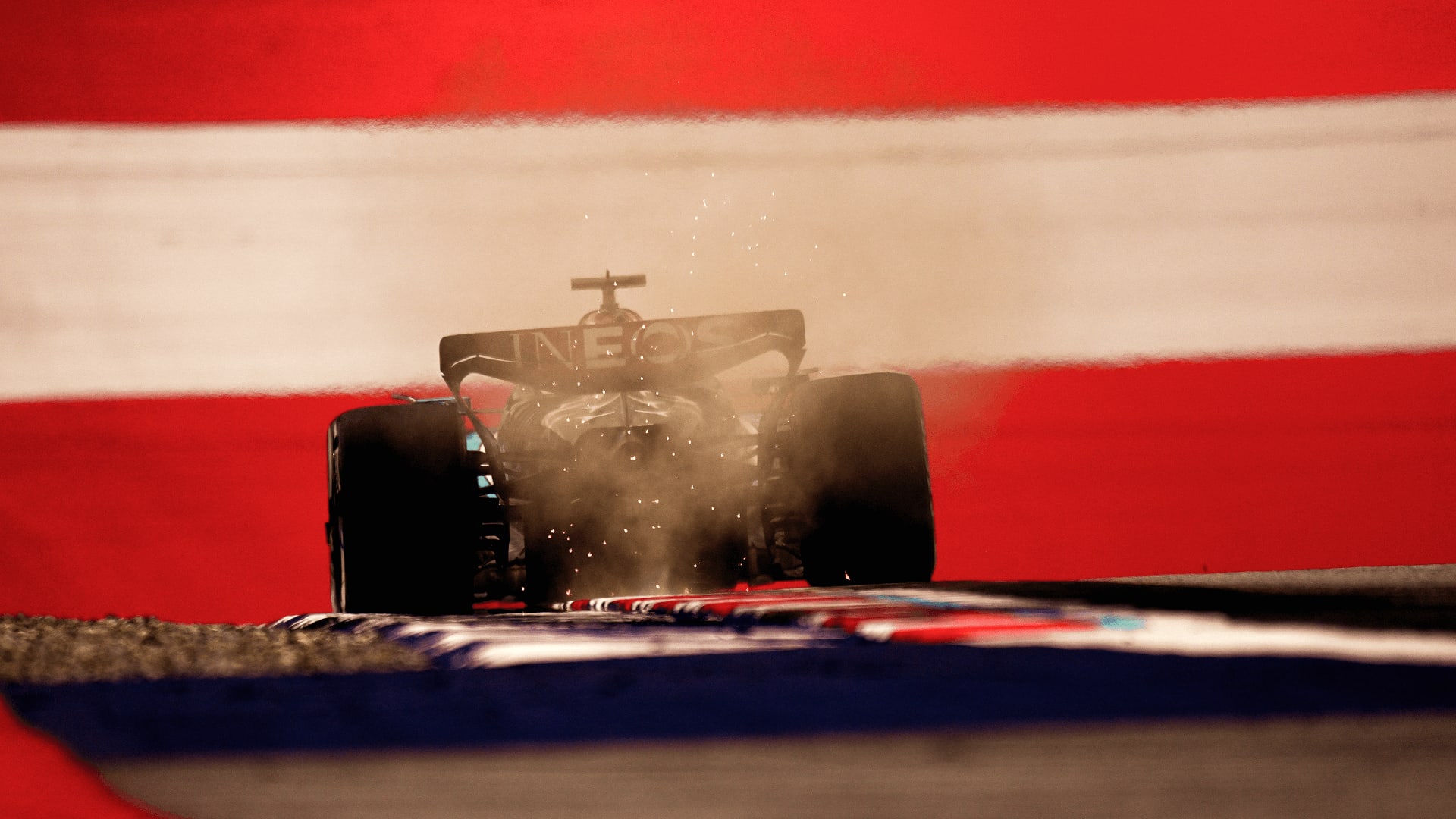
Practice 1 for the 2026 Austrian Grand Prix starts at 11:30 UTC on Friday, June 26. That sounds like the quietest hour of the weekend. At the Red Bull Ring, it rarely feels that way for long.
The official Formula 1 race hub lists this as the opening session for round eight at Spielberg, and the venue itself gives teams very little room to hide. The lap is only 4.318 km, the Grand Prix distance is 71 laps, and the circuit compresses most of its lap time into heavy braking, traction and kerb use rather than a long sequence of medium-speed corners. A small setup miss can look bigger here because there are fewer corners available to win the time back.
So FP1 is not about declaring a weekend winner. It is about finding out whose simulator baseline survives first contact with Austria.
The one-hour checklist
The useful FP1 questions are narrower than the headline timing screen usually suggests:
| Question | Why it matters at Spielberg |
|---|---|
| Who has braking stability? | Turns 1, 3 and 4 punish cars that cannot stop cleanly while rotating uphill or downhill. |
| Who can ride the kerbs? | The fast second half of the lap rewards commitment, but floor sensitivity can make the car nervous. |
| Who protects rear tyres? | Traction zones and high track temperatures can turn a quick single lap into a weaker race setup. |
| Who is already close on deployment and drag? | The short lap still has meaningful full-throttle sections, so efficiency matters. |
Pirelli’s Austrian preview is especially relevant because this weekend can swing with surface temperature. Austria often produces a wide gap between morning confidence and afternoon reality: a car that looks tidy early can slide more once the track heats up, while a car that needs temperature in the tyres may not show its full hand immediately.
That is the caveat for every FP1 read. The first hour gives direction, not proof.
The standout probability board
This is not a betting view, just an editorial probability range for who is most likely to look strong during the opening hour based on pre-session form, car traits and the track profile.
| FP1 standout group | Editorial probability | Why |
|---|---|---|
| Mercedes | 25-35% | Austria’s heavy braking and traction demands should suit a car that has generally been comfortable when the rear axle is settled. George Russell and Kimi Antonelli also need clean early runs because Spielberg’s short lap can make traffic expensive. |
| Ferrari | 20-30% | Ferrari’s recent development direction and the Red Bull Ring’s power and kerb demands make Lewis Hamilton and Charles Leclerc obvious baseline-watch drivers, though tyre life will matter more than a single purple sector. |
| McLaren | 15-25% | McLaren remains a natural threat if its car is efficient enough on the straights without giving away too much in the loaded final sector. |
| Red Bull | 10-20% | Home-race pressure is not a performance metric, but the team will want early confidence through traction zones and the fast right-handers. |
| A midfield surprise | 10-20% | Short laps can compress the field, especially if one team finds a cleaner starting setup or runs a lighter early programme. |
The ranges are deliberately broad because FP1 run plans are not equal. Some teams will spend more time on aero rakes, cooling checks or long-run correlation. Others may bolt on a representative tyre earlier and flatter the timesheet.
Cadillac’s upgrade makes FP1 more useful
Cadillac is one of the obvious teams to watch because this is not just a normal track-acclimation hour. Motorsport.com and RACER both reported that the team has brought a substantial Austria package, while Cadillac’s own Austrian build-up framed Spielberg as a compact circuit where braking, traction and precision matter.
That combination makes FP1 a cleaner test than many venues. A new floor and sidepod package should reveal something in three places: braking confidence into the uphill stops, mid-corner balance as the lap climbs and falls, and rear tyre behavior when the driver asks for traction out of slow corners.
Sergio Perez and Valtteri Bottas do not need to turn FP1 into a points prediction. They need correlation. If the car behaves as the factory expected, Cadillac can spend the rest of the weekend tuning. If it behaves differently, the team loses precious time on a circuit where the lap is over in barely more than a minute.
What makes the Red Bull Ring different
Spielberg is fun because it looks simple and then refuses to behave simply.
The first sector is mostly about power, braking and traction. The middle of the lap asks the car to stay calm as the circuit changes elevation. The final corners reward aerodynamic confidence, but track limits and kerb behavior can erase what looked like a good lap.
That is why Austria often creates misleading early reads. A driver can look quick because the car is low-drag and clean in sector one, then give time back if the tyres overheat or the balance goes away in the final part of the lap. Another car can look modest on the stopwatch while quietly building a better race platform.
For a 71-lap Grand Prix, that second version matters. The official lap count and short circuit length mean traffic, pit-loss calculations and tyre degradation all become more compressed. FP1 does not answer those questions, but it starts building the evidence.
What to watch without overreading it
The best FP1 signal is not the fastest lap by itself. It is whether a team can repeat a lap without the rear tyres falling away, whether both drivers say the same thing about balance, and whether setup changes move the car in the expected direction.
Mercedes versus Ferrari is the most interesting front-half comparison at the start of the weekend. Motorsport.com’s Austria build-up pointed to Mercedes as a credible rebound candidate while still noting Ferrari’s threat, which fits the track: braking stability, traction and engine delivery all matter here. If Mercedes looks settled quickly and Ferrari needs more steering correction through the final sector, that is meaningful. If Ferrari is efficient on the straights and kinder to the rear tyres, the weekend opens up.
The McLaren and Red Bull read is different. Their FP1 value is less about headline pressure and more about whether the car looks balanced across the whole lap. At Spielberg, a team can win one sector and still lose the bigger weekend if the setup only works for one tyre state.
The sensible conclusion at the start of FP1 is therefore restrained: Austria should quickly expose who arrived with a workable baseline, but it will not tell us who owns the weekend. For that, the field still needs the warmer running, the qualifying simulations and the long-run evidence that comes after this first hour.