
Aston Martin’s most important weekend may not be Spa. It may be the race after Spa.
That sounds strange during Belgian Grand Prix week, especially at a circuit that can expose power units, aero efficiency and driver confidence in one lap. But the team’s own race page frames Belgium as one more step before “more performance coming soon”, and Fernando Alonso has now put a sharper edge on what that means.
RacingNews365 reported today that Alonso sees the upcoming Hungary upgrade as a direction test, not a miracle cure. The important thing, in his framing, is whether Aston Martin proves it understands the AMR26’s weaknesses and is attacking them, particularly on the aero side. Sky Sports F1 has also flagged the package as one of the big talking points of the Belgium-Hungary double-header, noting that Adrian Newey had previously described a significant weight-reduction and aerodynamic rethink.
That is why this is today’s Daily Dose of F1.
GearPulse’s view: Aston Martin does not need Hungary to turn the AMR26 into a race winner. That would be an unfair bar. It needs Hungary to prove the team has stopped guessing. Spa is the final control sample. Hungary is where the development strategy either becomes patient engineering or an expensive delay with better branding.
Why this story rose today
The trend signal is not one headline. It is the timing.
Formula 1 published its Belgian GP race information, Aston Martin published its own Spa weekend page, Sky pushed Aston’s incoming upgrade into its Belgium-Hungary talking points, and RacingNews365 carried fresh Alonso comments on July 14. That gives the story a useful mix: official team context, official F1 calendar and circuit data, and same-day specialist/media pickup.
It also avoids duplicating the recent GearPulse run. Yesterday’s Daily Dose focused on Spa’s rain and 2026 energy-deployment test. The days before that covered Audi’s 2030 proof point, Red Bull’s Verstappen trust problem, Williams’ correlation worry and Ferrari’s Madring laps. Aston Martin’s delayed package is a different kind of story: not a result, not a weather forecast, and not a driver-market rumour. It is about whether a team that chose patience can finally show evidence.
That makes it more interesting than another generic Spa preview.
The gamble Aston made
Formula 1 explained the strategy last month: Aston Martin fell so far short early in the season that Newey and the team chose not to keep drip-feeding parts in the usual way. Instead, they committed to one larger package around the summer break.
There is logic in that. Under a cost cap, a team that starts with the wrong concept can waste money chasing small corrections. A bigger rethink can be cleaner if the factory understands the root problem. It can also be brutal, because rivals do not pause while you think.
That is the place Aston Martin finds itself now.
| Aston Martin choice | Upside | Risk |
|---|---|---|
| Wait for one major package | More coherent aero and weight changes | Rivals develop while Aston stands still |
| Use Spa as the final baseline | Clear comparison before Hungary | Poor Spa performance adds pressure |
| Focus on 2027 momentum | Avoid over-selling a lost 2026 | Drivers and sponsors still need evidence |
| Pair chassis work with Honda learning | Better whole-car efficiency later | Power-unit weakness may hide aero gains |
The key caveat is the rumoured scale of the gain. RacingNews365 cites talk of a very large chassis benefit, but until the car runs at the Hungaroring, that remains paddock expectation, not measured proof. GearPulse would treat any exact lap-time number as provisional.
What is not provisional is the strategic pressure. Aston Martin chose a slower visible development path. Hungary has to justify it.
Alonso’s standard is the right one
Alonso’s comments are useful because they lower the headline bar and raise the technical one.
He is not saying Aston Martin must win races this year. He is effectively saying the upgrade must show that the team understands why the car is weak. That is a better standard for a project in trouble.
There are two reasons.
First, a single upgrade can flatter a car at one circuit. Hungary is tight, technical and downforce-heavy. If Aston Martin looks better there, the first question will be whether that improvement travels to lower-drag tracks. A proper direction change should show up in driver confidence, setup range and repeatability, not only one Saturday lap.
Second, Alonso’s future sits in the background. Sky notes that the Hungarian race lands just before Alonso turns 45, and that his decision on whether to continue will be influenced by whether he sees positive results from the new parts. Aston Martin cannot sell him a spreadsheet forever. It needs the car to give him sensations he can trust.
That does not mean Alonso is the whole story. Lance Stroll also matters because a genuine package should help both sides of the garage. If only Alonso can extract it, Aston may have made the car sharper without making it easier. If both drivers move closer to the points fight, the team has stronger evidence.
Why Spa still matters
Spa is not just dead time before Hungary.
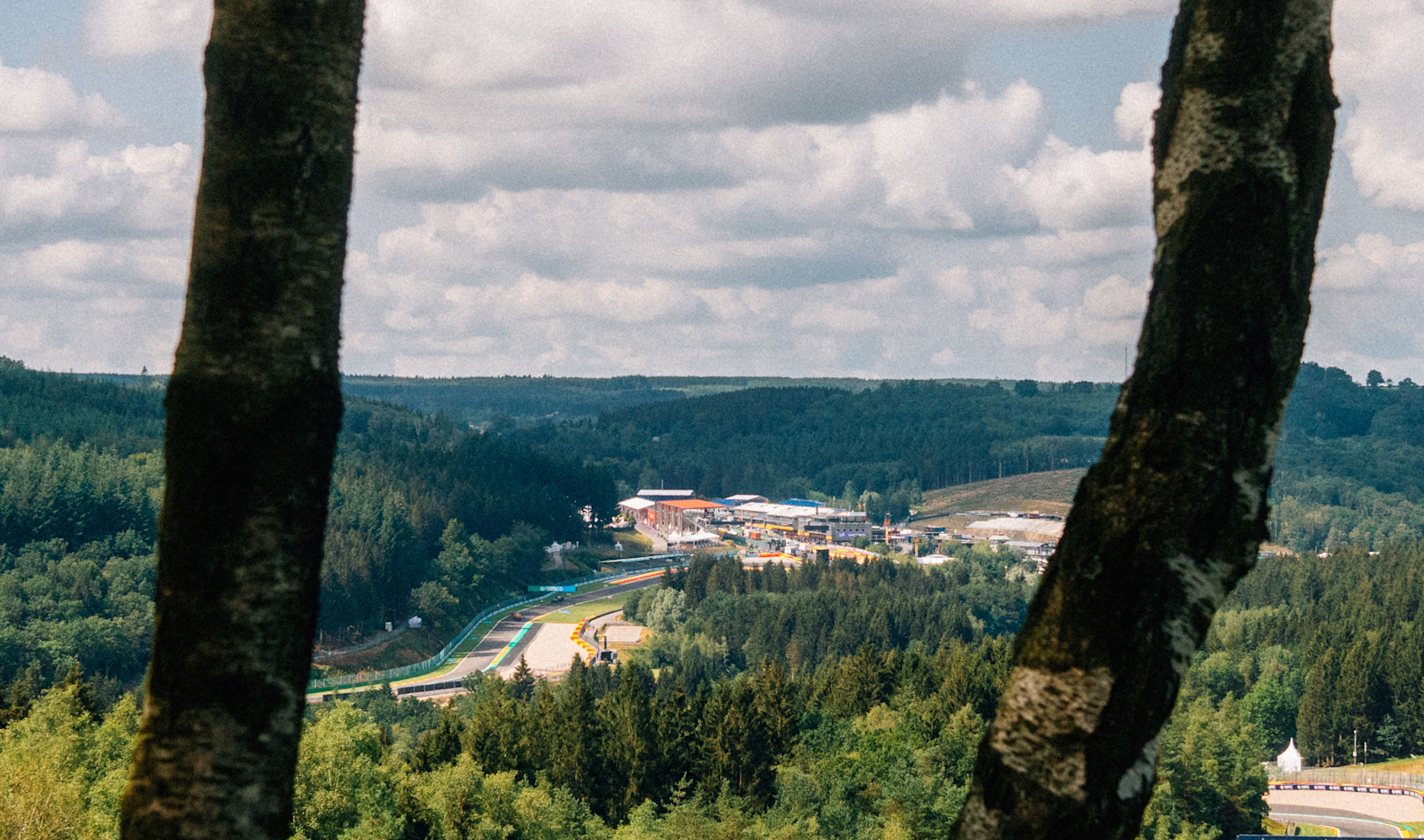
Aston Martin’s official Belgian GP page lists the circuit at 7.004 km, 44 laps and 19 corners, with four straight-line mode zones and the C2/C3/C4 tyre allocation. It also quotes Stoffel Vandoorne describing the setup challenge created by very high-speed corners and long straights. Formula 1’s race hub adds the classic Spa complication: the track’s size and Belgian weather can mean grip varies from one section to another.
That makes Spa a useful baseline even without the new package. If Aston struggles badly, the team gets one more honest reading of the current AMR26’s limits: drag, deployment, downforce, tyre warm-up, power delivery and driver trust. If it performs better than expected, the Hungary upgrade has to clear a higher internal bar.
Spa also has Aston Martin history. The team’s race page notes that Jordan took its first pole here in 1994 and first win here in 1998, while Force India scored a first pole and podium at Spa in 2009. Those facts are not performance evidence for 2026, but they explain why this venue carries weight for the Silverstone-based operation. The lineage has had big moments in the Ardennes before.
The current car needs something less romantic: clean correlation.
The Honda question cannot be ignored
Sky’s most important caveat is that Aston Martin’s problems are not only aerodynamic. The team has also had Honda-side issues in the first year of the new rules cycle.
That matters because a chassis package can be misread if the power unit remains a moving target. A lighter, cleaner, more efficient AMR26 may still look modest if deployment, drivability or cooling compromise keeps limiting the car. Conversely, a future Honda step could make the Hungary package look better than it really is.
This is the 2026 trap. Cars are no longer simple aero stories. Active aero, energy deployment, chassis balance, tyre use and power-unit behaviour are tied together. Aston Martin’s upgrade will be judged on lap time, but the useful question is broader: does the car give the engineers more options?
If the answer is yes, Hungary becomes a beginning. If the answer is no, Aston is still stuck in diagnosis.
GearPulse probability board
This is editorial analysis, not betting advice.
| Aston Martin read | Likelihood | Why |
|---|---|---|
| The Hungary package improves the car visibly | 60-70% | A long-delayed package should contain real gains, especially if weight and aero are both touched. |
| It transforms Aston into a regular top-six threat immediately | 15-25% | The team is starting from too far back, and Honda-side issues may still cap the whole package. |
| Alonso treats Hungary as evidence for 2027, not 2026 | 75-85% | His public framing already points to direction and understanding rather than wins this season. |
| Spa becomes a rough final baseline | 55-65% | The current car still has to face Spa’s long straights, high-speed load and weather uncertainty. |
| Both Aston drivers benefit equally from the upgrade | 40-50% | A healthier platform should help both, but sharper aero can also widen driver confidence gaps. |
The honest read is that Aston Martin is more likely to find direction than instant competitiveness.
That would still matter. In a season where Audi is trying to prove a long-range plan, Williams is questioning correlation, McLaren is learning the pain of customer-engine complexity and Red Bull is fighting trust issues, direction is valuable currency.
What to watch next
Do not judge the Hungary package only by the first practice headline time.
Watch whether the team can run the car in a wider setup window. Watch whether Alonso stops talking about specific weaknesses behind the wheel. Watch whether Stroll can place the car more confidently in traffic. Watch whether Aston’s straight-line deficit shrinks without making the middle sector worse. And watch whether the team needs several race weekends to unlock the package, because that would still be better than a package that looks good once and then disappears.
The most useful comparison will be pre-upgrade Spa versus post-upgrade Hungary, then Hungary versus the first race after the summer break. Spa tells us what Aston had. Hungary tells us what it built. The next race tells us whether the change travels.
Fun facts with a point
Spa is the longest circuit on the current F1 calendar at 7.004 km, but the original road course was 14.9 km. It was built in 1921 using public roads between Francorchamps, Malmedy and Stavelot, and Belgium was part of F1’s first world championship season in 1950.
For Aston Martin’s lineage, Spa also has a strange resonance. Jordan’s first pole came here. Jordan’s first win came here. Force India’s first pole and first podium came here. Racing Point’s first race after Lawrence Stroll’s takeover was also the Belgian Grand Prix.
None of that gives the AMR26 more downforce. But it does make Spa a fitting final checkpoint before a package that is supposed to show whether the modern Aston Martin project has a credible technical path.
Bottom line
Aston Martin’s Hungary upgrade is not interesting because it might magically fix 2026.
It is interesting because it will reveal whether the team understands why 2026 went wrong.
Spa gives Aston one more tough baseline at a long, fast, weather-sensitive circuit. Hungary gives it the first public answer to a development gamble that has been months in the making. GearPulse’s read: if the package gives Alonso and Stroll a car with clearer weaknesses and a wider operating window, it will be a success even without podium talk. If it only changes the talking points, Aston Martin’s patient strategy will start looking like lost time.
Support the site at buymeacoffee.com/gearpulse.site.