
Apple’s most interesting Mac mini story this week is not about a new chip. It is about where the little box starts to become real.
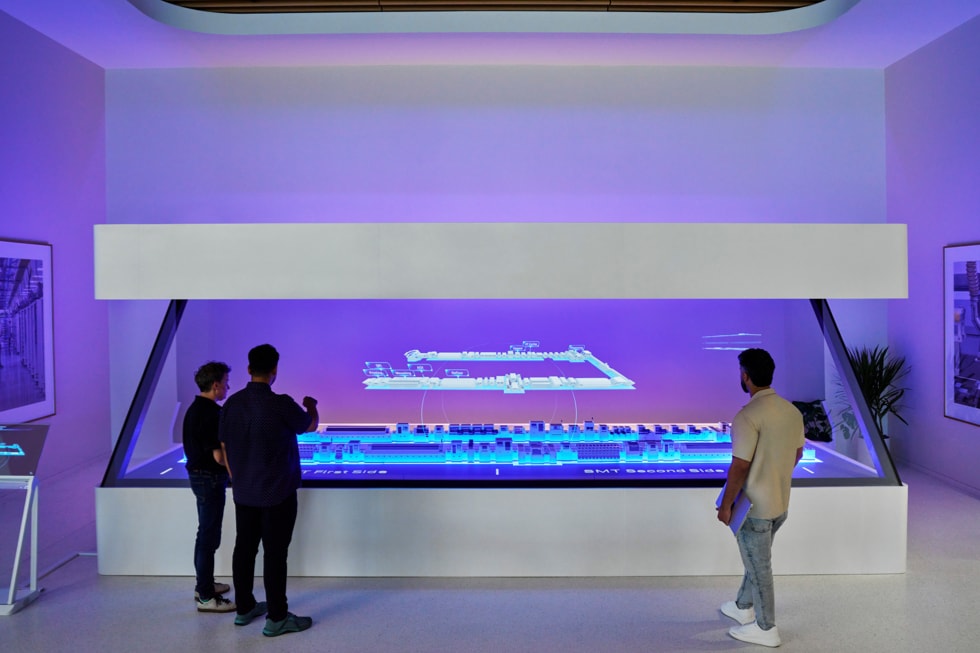
Apple opened its Advanced Manufacturing Center in Houston on August 13, describing it as a 20,000-square-foot training site for smart manufacturing, final assembly, printed circuit board assembly and machine-learning-driven quality control. The center sits inside the same Houston facility that Apple says already builds and ships advanced AI servers. Apple also says Mac mini production will begin there later this year.
That is a lot of supply-chain language for one desktop computer. It matters because the Mac mini has quietly become a perfect symbol for the AI hardware moment: small enough to sit under a monitor, powerful enough to run local models, and useful enough that Apple can point to it when it wants U.S. manufacturing to look practical rather than ceremonial.
My read: this is Apple turning the AI conversation back into metal, fixtures, training benches and supplier know-how. The industry loves talking about models. Apple is reminding everyone that the model race also depends on boring, beautiful manufacturing discipline.
What Apple confirmed
Apple’s announcement is unusually concrete by newsroom standards. The Houston AMC is not being described as a vague innovation lab. Apple says participants will work with representative production equipment, interactive labs and a holographic table, while learning processes used in Apple product manufacturing.
| Houston detail | What Apple says | Why it matters |
|---|---|---|
| Site role | Advanced Manufacturing Center for training and education | Apple is trying to transfer process knowledge to suppliers, students and smaller businesses. |
| Size | 20,000 square feet | Big enough to be more than a showroom, still focused enough to be a teaching site. |
| Location | Same Houston facility as Apple’s advanced AI server production | The Mac and AI-server stories are now physically connected. |
| Mac mini timing | Production begins later in 2026 | Apple is making a consumer Mac part of its U.S. manufacturing pitch. |
| Training areas | Final assembly, PCB assembly, automation, quality control | These are the places where yield, reliability and cost are won or lost. |
Apple said in February that the Houston center was under construction and would support hands-on training in advanced manufacturing. This week’s opening turns that earlier promise into an operating program. 9to5Mac and MacRumors both framed the launch around Mac mini production, while NewsBytes picked up the same practical point: this is where Apple wants the Mac mini manufacturing message to land.
The important caveat is scale. Apple has not said that every Mac mini will be made in Houston, and it has not published the full supplier map behind the facility. This is a meaningful move, not a magic reset of Apple’s global supply chain.
The Mac mini is a clever choice
The Mac mini is not Apple’s highest-drama product. That is exactly why it works here.
An iPhone factory would drag the story straight into geopolitics, margin pressure and impossible scale comparisons. A Mac mini line is easier to understand: compact enclosure, logic board, power, thermal design, ports, packaging and a clear link to desks, classrooms, labs and edge AI work. It is the kind of product that makes advanced manufacturing feel graspable.
It also fits Apple’s current AI posture. Apple Intelligence has been a software story on iPhone and Mac, but the hardware behind it is becoming more visible. Apple says the same Houston facility builds advanced AI servers. Putting Mac mini production nearby makes the site feel less like a data-center side quest and more like an ecosystem play: server infrastructure at one end, local Mac hardware at the other, and manufacturing training in the middle.
That is relevant for GearPulse readers because local AI is starting to become a normal buying question. We recently wrote about OpenAI’s Linux desktop app meeting developers where they already work. Apple’s Houston move is the hardware version of that idea. If AI is going to sit on desks, in factories and inside small businesses, the machines and the manufacturing skills need to be closer to the workflow too.
The politics are loud, but the process is the signal
Yes, the political cast was visible. Apple hosted U.S. Commerce Secretary Howard Lutnick, Senator Ted Cruz, Houston Mayor John Whitmire and local officials. That is how manufacturing announcements work in 2026, especially when tariffs, domestic investment and supply-chain resilience are all part of the conversation.
But the better way to read the announcement is through process.
Modern device manufacturing is not just labor plus parts. It is process control, machine vision, testing, automation, fixture design, yield learning and fast feedback between engineers and the factory floor. Apple says the first cohort at the AMC is working on topics such as identifying production challenges in real time, using advanced factory-floor equipment and assembling and laser-etching a product themselves.
That is the useful part. Small and midsize manufacturers do not need a photo op with a trillion-dollar company. They need to see how high-volume process thinking works before they spend money on the wrong machines or automate a bad workflow.
What to watch next
The Houston story gets more interesting if Apple answers three questions over the next few quarters.
| Question | Why it matters |
|---|---|
| Which Mac mini configurations are built in Houston? | A token line and a meaningful production footprint are very different things. |
| How many suppliers and students go through the AMC? | Training only matters if it spreads beyond Apple’s own walls. |
| Does Apple tie the site to local AI workloads? | Mac mini, AI servers and manufacturing automation become much more compelling when treated as one loop. |
There is also a durability test for the narrative. Apple can announce U.S. manufacturing beautifully. The harder job is making the work persist after the launch day cameras leave.
Bottom line
Apple’s Houston AMC is not proof that the Mac supply chain has suddenly moved home. It is proof that Apple wants AI-era manufacturing to look tangible: machines, trained workers, suppliers, quality-control loops and a Mac mini that people actually recognize.
That makes the story bigger than a regional facility opening. The AI boom is usually sold as software magic. Apple’s Houston message is more grounded and, honestly, more convincing: somebody still has to build the boxes.