
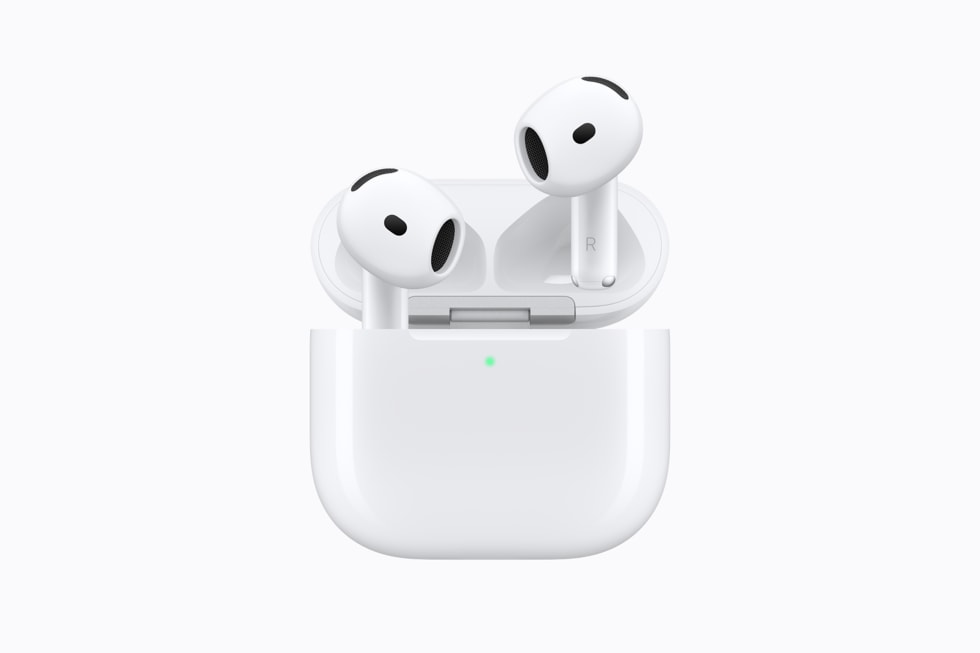
Apple’s new AirPods 5 start at $129, and for the first time in the standard AirPods line, that price already includes Active Noise Cancellation. It is a quiet but meaningful reset: buyers no longer have to pay a premium simply to make an open-fit pair of earbuds more usable on a train, in an office, or beside a busy road.
The new decision is not really between “AirPods with ANC” and “AirPods with ANC.” It is between a basic USB-C case and a $149 Wireless Charging Case that also brings stem volume control, a Find My speaker, Qi and Apple Watch charging, and an extra hour of claimed listening with ANC. Apple says both versions will be available September 18, after pre-orders opened September 9. MacRumors and Ars Technica independently reported the same pricing and configuration change.
The new split, in plain English
| Feature | AirPods 5 | AirPods 5 with Wireless Charging Case |
|---|---|---|
| U.S. price | $129 | $149 |
| Active Noise Cancellation | Yes | Yes |
| Charging | USB-C | USB-C, Qi, or Apple Watch charger |
| Volume swipe on stem | No | Yes |
| Claimed playback with ANC | Up to 4 hours | Up to 5 hours |
| Claimed total with case and ANC | Up to 20 hours | Up to 22 hours |
| Find My case speaker | No | Yes |
Those are Apple specifications, not a comparison of measured endurance. They still make the buyer math unusually easy. Twenty dollars buys the things that tend to irritate people over months of ownership: having to reach for a phone to adjust volume, keeping a second cable nearby, and locating a small white case that has slipped between sofa cushions.
ANC has stopped being the upsell
Apple says the new multiport acoustic architecture and updated computational-audio algorithms remove up to 50% more external noise than AirPods 4 with ANC. That is a company comparison, not a standardized ranking against every open-fit competitor, so it should not be read as a universal “best” result. Fit remains decisive with an open-ear design: unlike a sealed in-ear tip, it deliberately admits some of the physical world.
Still, putting ANC, Transparency, Adaptive Audio and Conversation Awareness in the entry configuration makes the product easier to recommend to the person who dislikes silicone tips but needs help with routine background noise. It also gives Apple a cleaner ladder: the standard AirPods are now the open-fit convenience pair; the Pro line can compete on sealed fit and its wider premium feature set rather than holding basic noise control hostage.
AirPods 5 use Apple’s H2 chip, Bluetooth 5.3, an IP57 dust, sweat and water-resistance rating, Personalized Spatial Audio, and Live Translation support. Some intelligent features depend on a compatible iPhone, current software and, for Apple Intelligence features, the relevant device support and languages. Non-Apple Bluetooth devices can play audio, but Apple explicitly says functionality is limited.
A more useful buyer boundary
The base model is not a compromised way to get ANC. It is the sensible choice for someone who mostly listens in shorter stretches, already charges with USB-C, and adjusts volume from a phone or watch without thinking about it.
For everyone else, the $149 version is the one to buy. Its fifth claimed ANC-on hour is modest by itself, but it matters on a commute or flight; the charging flexibility and stem control will be felt every day. Neither model is an automatic upgrade for a content AirPods 4 owner—the headline 50% figure needs real-world testing, and ear shape has a bigger say than press-release language—but the old version’s price-and-feature fork has been removed.
That is the interesting move. Apple has made the entry AirPods less of a feature negotiation and moved the premium to the friction around the earbuds. For a broader view of where they fit, see GearPulse’s true wireless earbuds guide.
Bottom line
AirPods 5 make noise cancellation a normal part of Apple’s open-fit earbuds rather than a paid tier. Buy the $129 pair only if the simpler case genuinely suits your routine; for $20 more, the Wireless Charging Case model is the better long-term purchase because it improves the moments between listening as much as listening itself.