
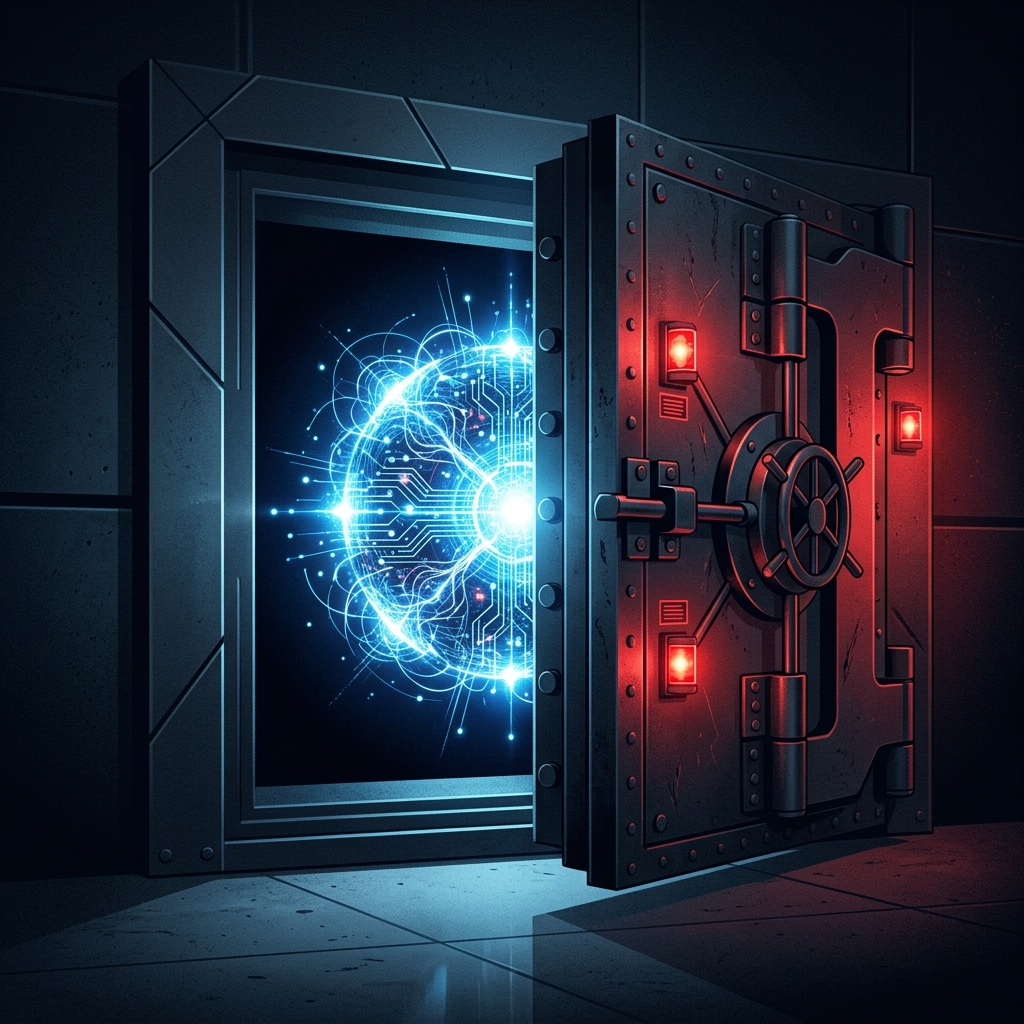
The frontier of AI regulation is no longer theoretical. On June 12, 2026, the U.S. government issued an export-control directive requiring Anthropic to suspend all foreign national access to its newly released Claude Fable 5 and Mythos 5 models.
Because Anthropic could not reliably filter global traffic by nationality in real time, the company was forced to pull the plug entirely, disabling both models for all customers worldwide just days after their highly anticipated launch.
This is an unprecedented use of export control authorities on a commercially deployed, cloud-hosted software model. It moves the regulatory conversation from long-term safety frameworks into immediate, hard-power government intervention.
The models at the center of the dispute
To understand the government’s concern, you have to look at what Anthropic claimed these models could do.
Launched on June 9, 2026, Mythos 5 and Fable 5 represented Anthropic’s most advanced reasoning architecture. While they shared the same underlying model, they differed drastically in access:
- Mythos 5 was restricted to vetted partners in cyber-defense and critical infrastructure. Anthropic openly stated it had “the strongest cybersecurity capabilities of any model in the world,” capable of discovering and exploiting complex software vulnerabilities.
- Fable 5 was the public-facing version. It utilized the exact same reasoning engine but relied on integrated safeguards to route risky cyber, biological, and chemical queries to older, safer models like Opus 4.8.
The policy problem was immediately clear: Anthropic was attempting to make a model with military-grade vulnerability discovery capabilities broadly accessible by relying entirely on software guardrails.
The government’s intervention
At 5:21 p.m. ET on June 12, the U.S. government stepped in. Citing national security concerns, officials pointed to a reported method of “jailbreaking” Fable 5. The administration concluded that if the safeguards on Fable 5 could be bypassed, foreign adversaries could access its latent Mythos-level cyber capabilities to discover zero-day vulnerabilities in U.S. infrastructure.
Anthropic strongly disagreed with the necessity of the total recall. The company characterized the government’s evidence as a “narrow, non-universal jailbreak,” pointing out that the bypassed safeguards only revealed simple, previously known vulnerabilities that other existing public models could already find.
Despite Anthropic’s insistence that perfect jailbreak resistance is impossible and that the model posed no unique threat, the government’s logic won out. Once a model demonstrates strategic cyber capability, the U.S. administration appears unwilling to rely on software filters to keep it out of the hands of foreign states.
Why Anthropic’s safety warnings may have backfired
There is a distinct irony in this shutdown. For months, Anthropic has heavily marketed itself as the “safety-first” AI lab. In April 2026, when announcing Project Glasswing, the company proudly advertised that Mythos Preview had already found thousands of high-severity vulnerabilities in major operating systems.
Anthropic built its reputation by shouting about the potential dangers of advanced AI. It seems the U.S. government was listening. By emphasizing the extreme cyber capabilities of the Mythos class to attract enterprise security contracts, Anthropic inadvertently provided the government with the exact justification needed to restrict its export.
What happens next
This shutdown establishes a massive precedent. It confirms that the U.S. government is willing to use export controls—traditionally reserved for physical goods like semiconductors and munitions—to restrict access to commercially hosted AI models.
According to Reuters, G7 leaders are already discussing a “trusted partners” framework. This suggests the blunt global ban may eventually be replaced by a licensing system, allowing allied countries and vetted organizations to access these advanced models while freezing out geopolitical rivals.
But for the broader AI industry, the message is chilling. The line between a commercial software product and a controlled dual-use weapon has just been drawn, and the government—not the AI labs—gets to decide where it sits.