The Samsung and Neuralink story moving around this week is interesting, but it should not be oversold.
What has actually happened so far is this: on June 15, 2026, Korea Economic Daily reported that Samsung Foundry had won its first Neuralink chip order and would work on a future-generation implant chip. SamMobile followed with a similar summary. What has not happened is a public partnership announcement from Samsung or Neuralink themselves.
That distinction matters.
What is confirmed and what is only reported
| Status | What we can say |
|---|---|
| Confirmed | Samsung is pushing deeper into health technology and brain-computer interface research. |
| Confirmed | Neuralink is expanding clinical work around Telepathy and says it now has 21 participants in trials. |
| Confirmed | Samsung Foundry openly pitches advanced process nodes, including 4nm, for outside customers. |
| Reported, not publicly announced | Samsung Foundry may be building a next-generation Neuralink chip. |
That still leaves room for the report to be right. It just means readers should treat it as an industry report, not a finished corporate fact.
Why the report is plausible
The reason this rumor has traction is that it matches both companies’ direction.
Samsung is not only a phone company. Its semiconductor business wants foundry customers that signal technical credibility, and its public health-tech messaging has become more ambitious. In a Samsung Newsroom post from late 2025, the company said it had partnered with Hanyang University to build an around-the-ear EEG prototype and explicitly framed that work as advancing brain-computer interface technology.
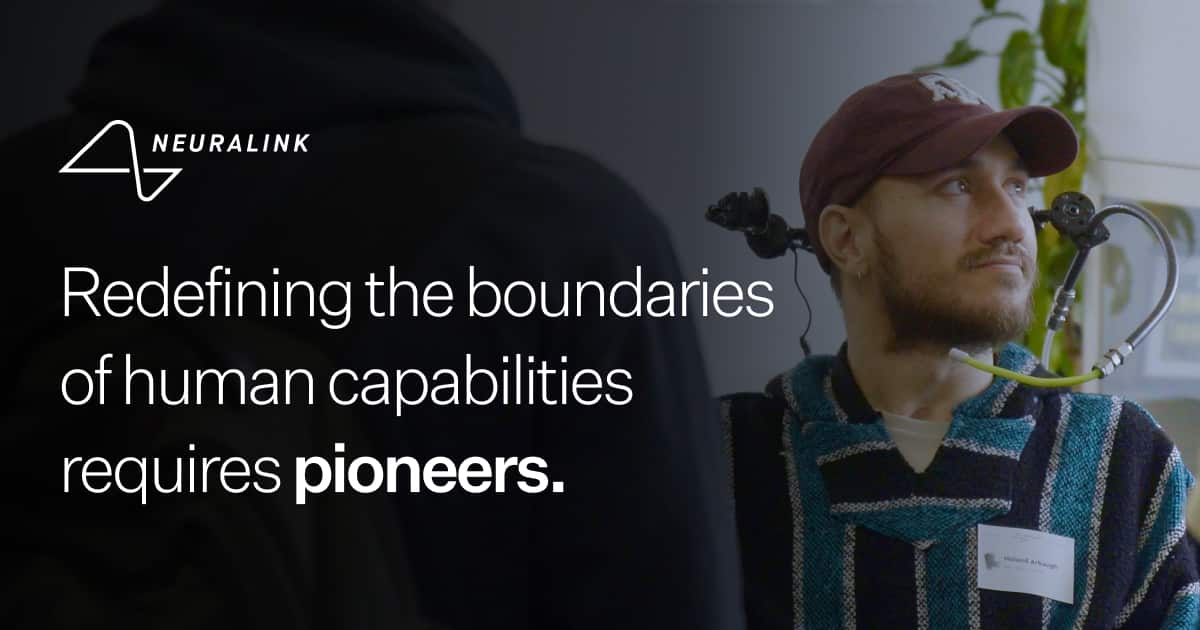
Neuralink, meanwhile, is no longer only a laboratory curiosity. Its January 2026 update said it had 21 participants enrolled across trials and laid out a more concrete product path around cursor control, communication, and restoring autonomy for people with paralysis and ALS.
Put those pieces together and the reported fit makes sense: Samsung brings manufacturing scale, and Neuralink needs increasingly serious chip and packaging work if it wants to move from pioneering demos to repeatable medical hardware.
Why the wording still matters
Calling this a “Samsung-Neuralink partnership” as if it were already launched is too loose.
A real public partnership story would normally include at least one of these:
- a press release from Samsung
- an update from Neuralink
- named process details or commercial terms
- a timeline that both sides are willing to own
Right now, none of that is public.
The bigger read
Even if the report holds up, the significance is less about celebrity-company crossover and more about where BCI is heading.
If mainstream foundry capacity is being tied to Neuralink’s next hardware cycle, that suggests brain-computer interfaces are slowly moving out of the one-off prototype phase and into something closer to an industrial roadmap. That is a meaningful shift.
It also says something about Samsung. The company appears to want a role in computing categories that sit beyond phones and PCs, especially where sensors, AI, low-power silicon, and health data begin to overlap.
Bottom line
There may be a real Samsung-Neuralink manufacturing relationship taking shape. The reporting points that way.
But as of June 17, 2026, readers should treat it as a reported deal, not a publicly confirmed partnership. That is a less dramatic headline, but it is the correct one.